

The Ferry Boat Children
For the children of south Mull, secondary school means leaving home age eleven. Their parents' silence was never consent.

Before we start, a quick note. I meant to write you something gentler.
The plan was a flight to Mull.
Then a friend who lives there told me this story. A story of what’s happening to some families in Mull. So, I decided the gentler piece could wait. I flew north, crossed the water and spent a week at kitchen tables, on crofts, in a bookshop, listening.
This is still a travel story. Not about the view, but the thing the view was hiding.
There’s a podcast version of this piece, with the real voices and the sounds of the island in it. If you’d rather listen, it’s on Apple and Spotify. It’s worth a pair of headphones.
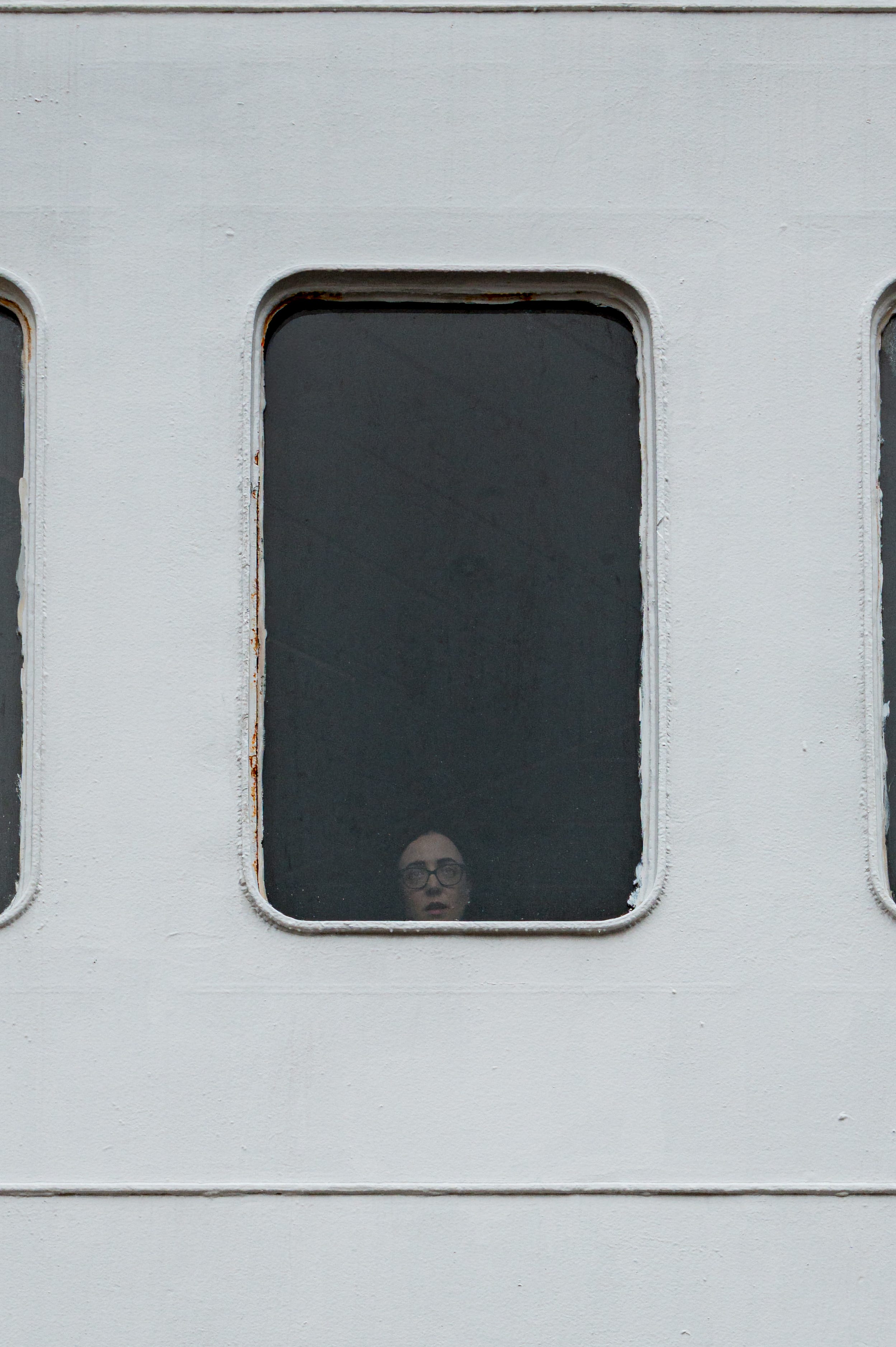
Room for more
Amy and Sam’s morning begins at a quarter to seven with their two young daughters landing on the bed.
Downstairs, around the big kitchen table, in front of the wood-burning stove, there is porridge. They talk about the day ahead, and each of them, in turn, names one thing they are grateful for. They do this every morning.
Then it’s the small, muttered urgency every parent knows, the wellies, the coats, where are the coats, the banana that has to go in the bag before anything else can happen. Sam runs the checklist out loud. Erin is already in the van. Rosie is here somewhere.
And then they are in, and the doors close, Amy in the driver’s seat, and the van pulls away up the single-track road, two children in the back and room for more.
Soon after they leave, the road climbs, and the open sea falls away behind them.
Ten minutes later, the van slows by a house at the side of the road. Two children are already waiting, a boy and a girl. Their mother opens the door. It slides shut, and now there are four.
Over the next twenty minutes, the van stops a few more times, a child or two climbing into the back each time. The little ones play with a Hatchimal. The older ones are quiet today.
By the time the school comes into view, there are eight of them. The youngest is five, the oldest eleven.
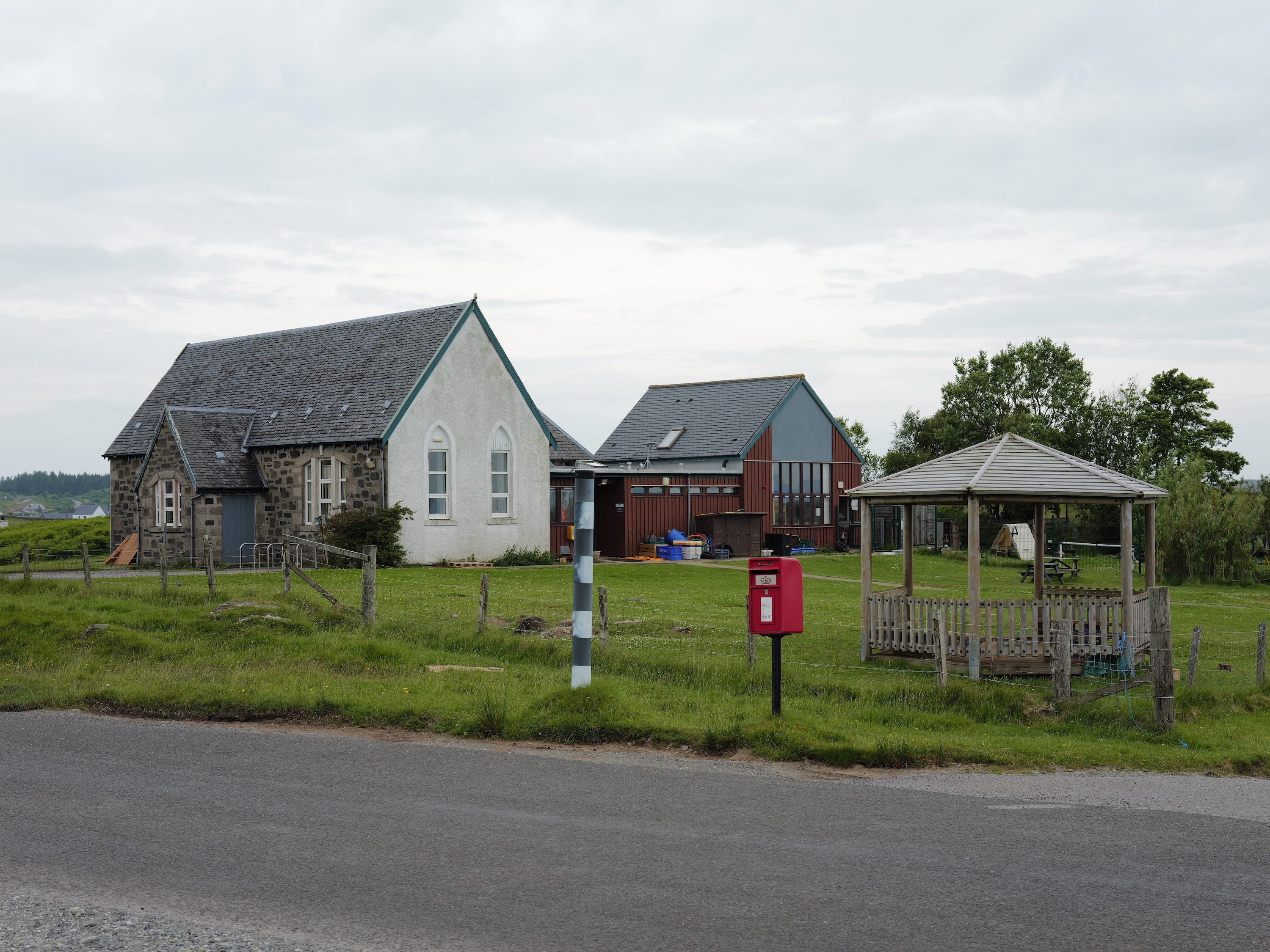
Amy knows every one of them. She knows what each of them had for breakfast. She has driven this bus for two years, the school run down the Bunessan road, every morning and every afternoon.
In a few months, the eldest child on Amy’s bus will be gone. Not for a day trip. She will move to the mainland, across the sea, and live there through the school week, because the island’s only secondary school is in the north, and a school bus from the south, stopping at every road-end, would swallow up to three hours of a child’s day.
She’ll go every week, until she’s an adult.
The little ones on the bus will still be here. She will be the one who goes. And then, one by one, the rest will follow.
She’s eleven.
In her house, the breakfast table will still be full of the ordinary morning noise. But her chair will be empty for most of the year. And the parents of the little ones still riding the bus, Amy and Sam among them, already know their turn is coming.
They will say goodbye, and drive home.
The Ferry Port
Two days earlier, I had flown north in Saoirse, my small plane. Cambridge to Glasgow in under two hours. Then, two more hours driving north to Oban, to the ferry port where around thirty children from Mull arrive every Monday morning for the school week.
From the pier at Oban I could see Mull already, across the water. The crossing to Craignure still takes about an hour.
My decision to cross the sea was my own. I could do it at any time. The children can’t. For the families of south Mull, it has been like that for generations.
The ferry’s horn sounded. Mull, ahead. I drove off the boat and turned toward the Ross of Mull, to the south, where Amy and her family were waiting for me.
Order Restored
Annemarie’s family has been on the island for generations. Her mother was among the first to be sent away to study. She never really came home again, Annemarie would tell me. Home was not really home anymore.
Now, two generations later, her son is on the ferry every Monday morning.
The following day, after their yoga class, Annemarie came over for dinner. Sam had put the girls to bed an hour earlier. The four of us sat at the same table where the porridge goes round in the mornings, and at some point, the talk turned to the school.
Annemarie started with the weekend routine. Her son arrives on Friday evening. They have Saturday to be a family, to do family things. And then Sunday, and the circle starts all over again.
You know that Monday morning dread, she said, when you hate your job and you can’t face going back? The children get that on a Sunday.
Sunday is the day of washing, drying and ironing, because the clothes that came home on Friday have to be packed again for Monday. And then the bag sits at the bottom of the stairs. You come down, and you see it, she said, and it’s this little reminder of what’s coming.
Sometimes there’s an invitation, a barbecue at someone’s house, all of them welcome, just a couple of hours, you’ll be home in time. But her son doesn’t want to leave the house on a Sunday, and she won’t leave him. How do I say I can’t go, she told me.
Then it’s showered, prepped, and into bed early, because Monday starts too fast and too early. Annemarie takes her son to the bus. The parents arrive, the children are quiet, sleepy. She says goodbye, throws the bag in, and drives home quickly.
That’s a weird feeling, she said. Most mums know that empty-nest feeling, even when a child’s just away on a school trip. Being in the house by yourself, something’s not right, and you can’t explain it. Other parents still have children at home. I’ve only the one.
While eating the stir fry Amy and Sam had prepared, Annemarie told us that her mum still phones her during the week. What has she eaten, come to hers for dinner, has she eaten today. And Annemarie thinks, what’s the point. A bit of toast and bed. It’s fine. You lose all motivation for it, she said.
While her son is away, she often ends up sitting in his room. She’ll put the telly on, or just sit and scroll on her phone. It felt different in there. It’s weird. I did it when he was wee as well. I don’t know what that’s about.
Her son went later than most.
I found it harder than he did, she said.
In the winter, the week ends with the weather. Annemarie watches the forecast for days, the wind speeds, the gusts, checking whether the ferries will sail, wondering whether anyone is going to call the crossing off while her son is on the other side of the water. You don’t realise how on edge you are, she said, until you’re constantly checking it.
It builds towards the end of the week, the anticipation of him coming home. And then it’s Friday, and she’s back at the same bus stop where she said goodbye on Monday. Once the bus is there, she told us, you just feel lighter.
In the summer, it’s easier. It’s light, the chippy’s open, so they get fish and chips and go home, and it’s Friday. The minute he’s home, she’s straight into it. Right, she said, what will we cook? Order has been restored.
Not Yet
In the morning, I was back at the same table, same seat, this time with Rosie and Erin on either side of me, and a bowl of porridge in front of me, my first.
And off they went, Amy driving the school bus. I followed the same road toward Bunessan, along Loch Scridain, a long arm of the sea lying beneath Ben More, the island’s highest peak. The road was taking me to Rob and Owen’s croft.
The croft sits at the top of a hill.
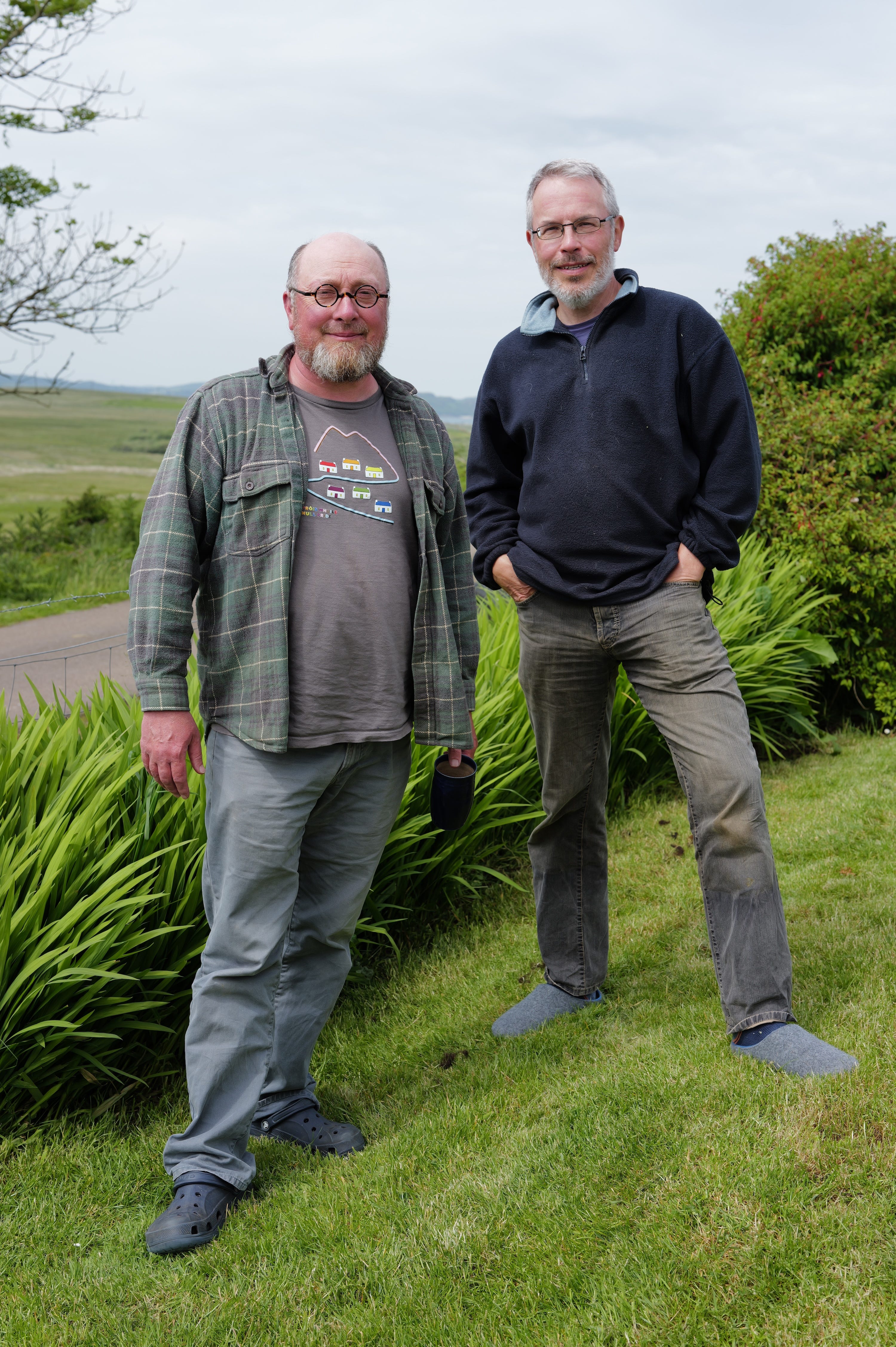
On the drive up, I passed a flock of sheep, chickens, ducks, a small greenhouse on the right, and scrap cars scattered along the road. And the wind. As a pilot, I live by the wind, and still it took me by surprise, the house at the top of the hill catching the full force of it from the west.
The dogs came first, three of them, and by the time I was out of the car, Rob was at the door. He welcomed me into their living room, and Owen brought us all a cup of tea.
They first came here from Yorkshire in 1999, a February week’s holiday, and it was enough. It sounds a bit tacky, Rob said, but it felt like coming home.
They spent years after that looking for a place of their own on the island. Then this house came up. On the day they viewed it, the man selling it, a good friend of theirs now, asked if they’d be living here. I said, not yet, Rob told me. It would be another twenty years before the answer changed.
And for Rob and Owen, there was a reason. On the mainland, they were raising two adopted children, and a life spent adopting and fostering, Rob told me, means dealing constantly with separation and loss. Moving to Mull would have meant sending the children away after primary school, and putting a child who has already lost too much into a situation where they must live away from their family again, there was no way they could do that.
In 2020, to the house and garden, they added the croft around it, 130 acres of land. One of the rules of crofting is that you have to live within fifteen kilometres of your croft. So Rob moved in, literally a week before lockdown, and lived here on his own for nearly four years, while Owen worked in Yorkshire until he retired.
One winter, the situation they could never have planned for arrived. Their granddaughter needed somewhere to live. She could not live with her parents, and it happened on an emergency basis, almost overnight. The question was whether, between the two of them, they could look after her. Owen was still working full-time in Yorkshire, so the answer was Rob, and the croft. Within days, he was back on the hill with a toddler, not yet two.
More than once that morning, when the subject came too close to Rob, Owen would pick up the thread, quietly, and carry the answer on until Rob was ready to take it back.
The sheep still needed feeding every day, whatever the weather. So she was immersed in crofting life from the start, out in the snow and the rain and the wind, sat on Rob’s shoulders, because this is no terrain for a pushchair. Luckily, Rob said, she’s a resilient child. Quite up for it.
We had no idea, when I moved here and we bought the croft, that we would be caring for children. Rob had told me that before I ever came to the island. Now they were raising a child in the very place that would one day ask them to send her away.
They had always known, of course. And as Rob adapted to living here, he adapted to that being the arrangement, too. He became involved in the school community and the school system. You come to understand the normality of it, he told me, that children go away for high school.
In 2022, Argyll and Bute Council, the mainland authority that governs Mull, came to the island with a plan. They needed to build a new high school, and they came asking: what do you think, are you for it? It was presented as a high school for the whole island.
To the families of the south, that could only mean somewhere central. Somewhere like Craignure, the port where my ferry had landed, near the middle of the island, where the hospital is.
It felt like an amazing gift, Owen said, this opportunity. Craignure would still be a long way from the Ross, an hour’s journey each way. But it would make it viable for children to live at home with their families.
The gift did not last. The story of how it was taken back comes later. It was projected as a school for the whole island, Rob said. Everybody got behind it, got excited, this is something we desperately need. And it’s an outrage to have it just passively abandoned.
Living here, he told me, there is so much you have to compromise on. You make things work as best you can. A lot of it isn’t ideal, and much of that is part of the joy of it, the resilience, the strength of a community that relies on one another. People get through.
Then Rob stopped compromising. People haven’t been complaining, he told me. They’ve knuckled down, got on with it, hidden their tears, hidden their anger, and worked with it since the 1950s. That doesn’t mean it was ever right.
For the families who stayed, generation after generation, there is something else, and Rob named that too. You’ve had to say, toughen up, crack on, it’s for the best. You’ve had to do that to help your children cope.
So there’s a guilt, Rob said, that comes down the generations with everything else. The guilt of living with a system you know has done harm, but is the only option available, so you have to do it.
Rob has a thing for chiming clocks. It was one of them that told me I had spent nearly three hours talking to them.
Education, Rob said, is an absolute basic, a normal thing for everybody in this country to access. And living away from your family, in any community, is an extraordinary arrangement.
It’s never a normal one.
Two voice notes
Children sent away ten, twenty years ago are adults now. Some are parents themselves. A few have begun to say out loud what those years were like, the years their own parents got through by not complaining. Two of them, sisters, had agreed to tell me.
The following day, their voice notes arrived. At Amy and Sam’s, I listened to them twice, then a third time, and a fourth.
Two voices, recorded alone, one after the other. Siobhan’s came first.
She grew up in Bunessan, on the road Amy drives every morning. She is in her thirties now, a mother herself, and she runs a seafood bar in the Ross of Mull. At twelve, she was sent to board at the hostel in Oban.
“Growing up in Bunessan on Mull, I had such an amazing childhood, growing up with my brother and sisters in our family home. When I turned twelve and it was time for me to start high school, I had to then go and board at the hostel.
My life changed on that first day.
I went from being very confident and happy to an emotional, terrified and anxious child. In my first year at high school, there wasn’t a day where I wasn’t sick due to crying so much.
No matter how much love and kindness the staff in the hostel and the school gave me, nothing helped.
Even to this day, the taste of apple juice or the smell of TRESemmé shampoo makes me physically sick, as it takes me back to the worst year of my life.
After first year, the situation improved slightly. Her younger sister and cousins started school, so she had a little bit of home with her. Then it was their turn, and Siobhan spent her efforts trying to make it easier for them than it had been for her. Not that that was possible, she said. No child of eleven or twelve could cope with being forced away from home so young.
She left school with very little grades. I had no one to help me with my homework or encourage me to study for my exams. If I had been able to stay at home, my education would have benefited so much.
The second note was Gemma’s. She went at eleven.
All my friends would return home to their own bed and the comfort of their family, whereas I had to return to a building full of strangers all on my own.
I felt abandoned.
I came back from school every day crying on the phone to my mum and dad. All I wanted was comfort from my own family. Was that so hard to ask for, for a child so young?
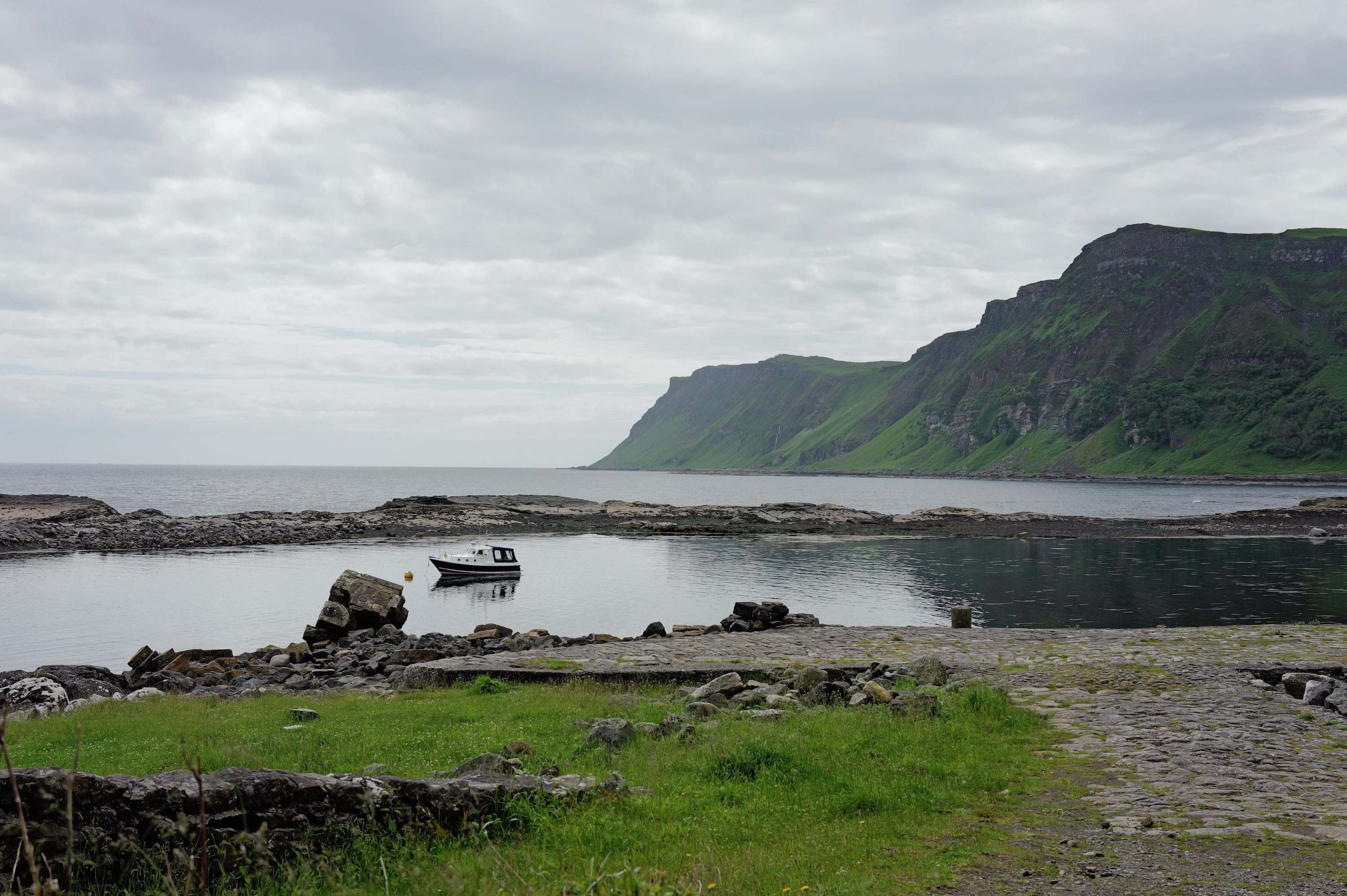
They are our children
Later that evening, we were back around the kitchen table, Amy, Sam and me. The girls were fast asleep, worn out by school and a swim at the island’s only pool, up at Craignure. The last two evenings at this table, the conversation had been about other families. This time, it was about theirs.
They came to Mull from Lancashire for a month or two, with no intention of staying. Amy had a job lined up in France, and that was the plan. Then, while they were here, the job running the estate came up, and they changed their plans, though they still didn’t think they’d be staying long. The people offering the job in France told Amy she could take as long as she wanted.
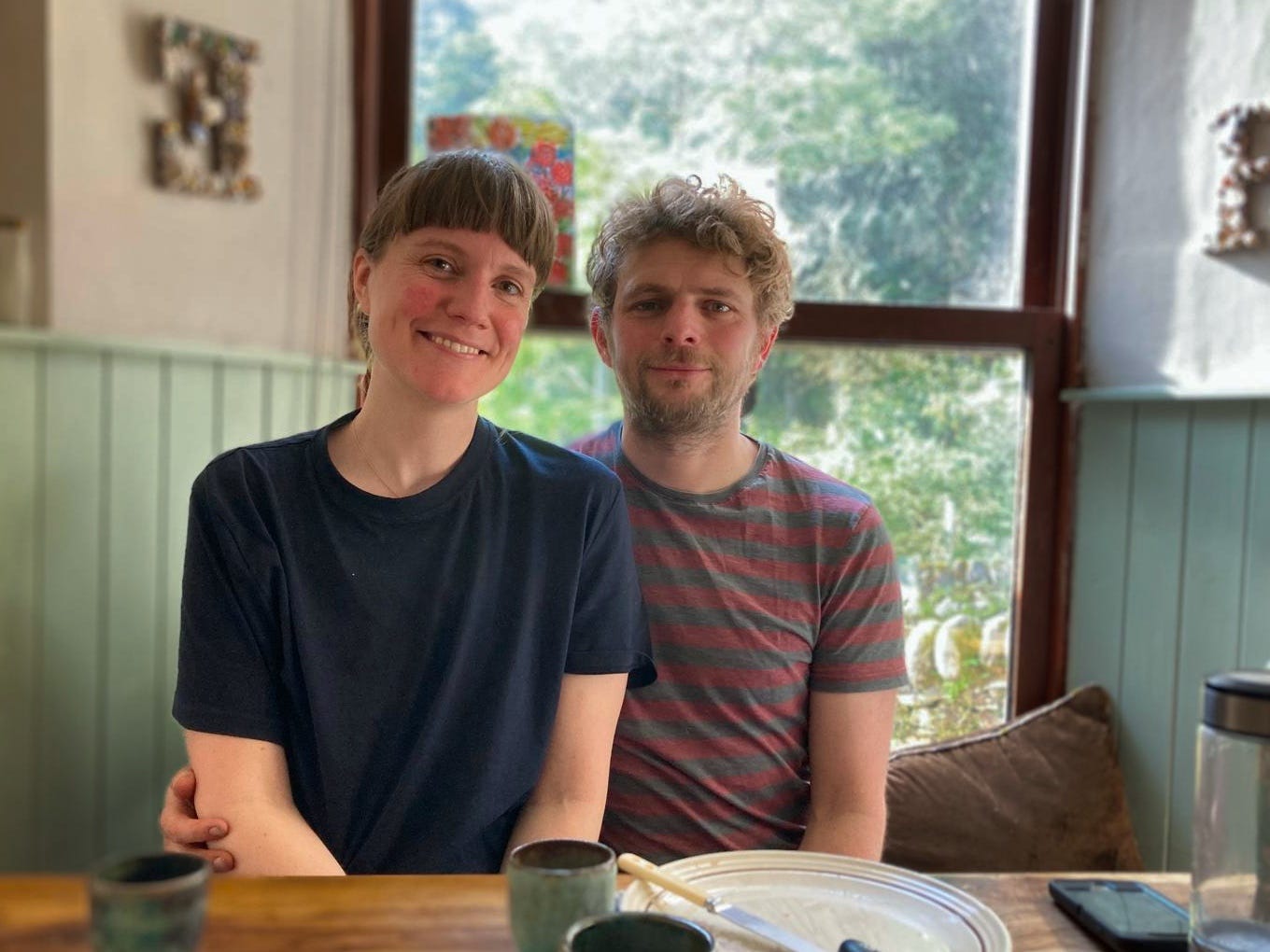
So they stayed, Sam told me. And they loved it. They fell in love with everything about it.
Then came the girls. We didn’t realise what an impact having children would have on us, Sam said, and we didn’t realise what an impact the island would have on them. The girls love their life here, the friends, the teachers, the other parents at the school. They’re so lucky to have all of it, he said. But once they finish at the primary, that has to end. They either go to Oban, or we leave.
I asked why Oban was not an option.
Sam went first. He has a friend who went to school in Oban and has nothing but good things to say about it, a talented rugby player who got things there the island school could never have offered him. Someone else, hearing Sam had been asking questions, sent him a message just to say they’d gone and had the best time.
It’s really important to remember, Sam told me, that this is the case for a number of people.
But over the last five years, Sam said, social media, phones, the way children can be reached online, has changed so much it’s unrecognisable to him. He’s not someone who uses any of these platforms.
I believe it’s really dangerous, he told me, something even the best parents in the world can’t police. The ultimate responsibility for the welfare of my children lands with me, and I don’t think I can trust that to anyone else. It’s got nothing to do with Oban. God knows where it’ll all be in five years, or eleven, by the time they’re sitting their exams.
I want to know what they’ve eaten, Amy said. I want to feed them, sit around the table at night, have them walk the dog when they get in. I know teenagers grump off upstairs, we’re not stupid. But you notice the little changes in behaviour more than anyone else can.
I don’t want this thing we’ve got here, this family thing, this wonderful thing, to stop when they’re eleven. I just want them to sleep in their own beds and have us there if they need us. It’s very simple in my mind.
Even just knowing whether they’ve eaten their breakfast, she said, so if one of them was off their food, I know to give them a bit extra later. It sounds simple, but it’s huge. It’s your function as a parent.
There was something else, Sam said, that probably happens to a lot of parents. Before he had children, he knew kids went to Oban for high school, and it didn’t mean anything to him. They go across, they stay in a hostel. People go to boarding school. Whatever. Then you have children, he said, and you realise an eleven-year-old is really, really young, and there’s so much they still need from you.
They’re just babies, Amy added.
Near the end of the evening, the talk turned to the ways they might still make it work. There is one they have looked at. Sam stays for the estate, and Amy takes the girls away for the high school years.
Even if one of you goes and one stays, Amy said, you are still leaving. You’re still splitting up your family.
She had asked Sam once whether there was a world in which his boss saves the job for six years, someone else runs the estate, and Sam swoops back in after. It’s never going to happen, he said.
Do we love this job so much we’re going to split up our family for six years, Sam asked. No. I don’t.
There’s probably nothing in your life, Amy said, that you would rather do than your family. I don’t think this job and this house is worth splitting us lot up.
It was late when we finished. The girls had been asleep for hours, one floor above the whole conversation.
That night they knew nothing of any of this. Their parents make sure of it.
Nothing is decided
The next morning was my last at the house. My bag was in the car. The plan was to drive the length of the island, up to Tobermory in the north.
Just before the girls left for school, the gratitude went round the table again. This time I was in it. When it came to me, I said I was grateful for the days I’d spent with them. Out of the window behind them, the mountains and the sea.
The rest of the morning went the way the first one had. Wellies, coats, the bags already in the bus, a reminder not to forget the orange.
You need to say bye, Amy told the girls. He’s gonna be gone. A chorus of byes at the door. Until next time, I said. Next time I’ll bring my children.
Please do, they said.
Then off they went, and the van pulled away up the single-track road, the same road, the same sea falling away behind it.
I left in the heaviest rain since I’d arrived. The rental car’s radio wouldn’t tune to anything, so I listened to the rain instead.
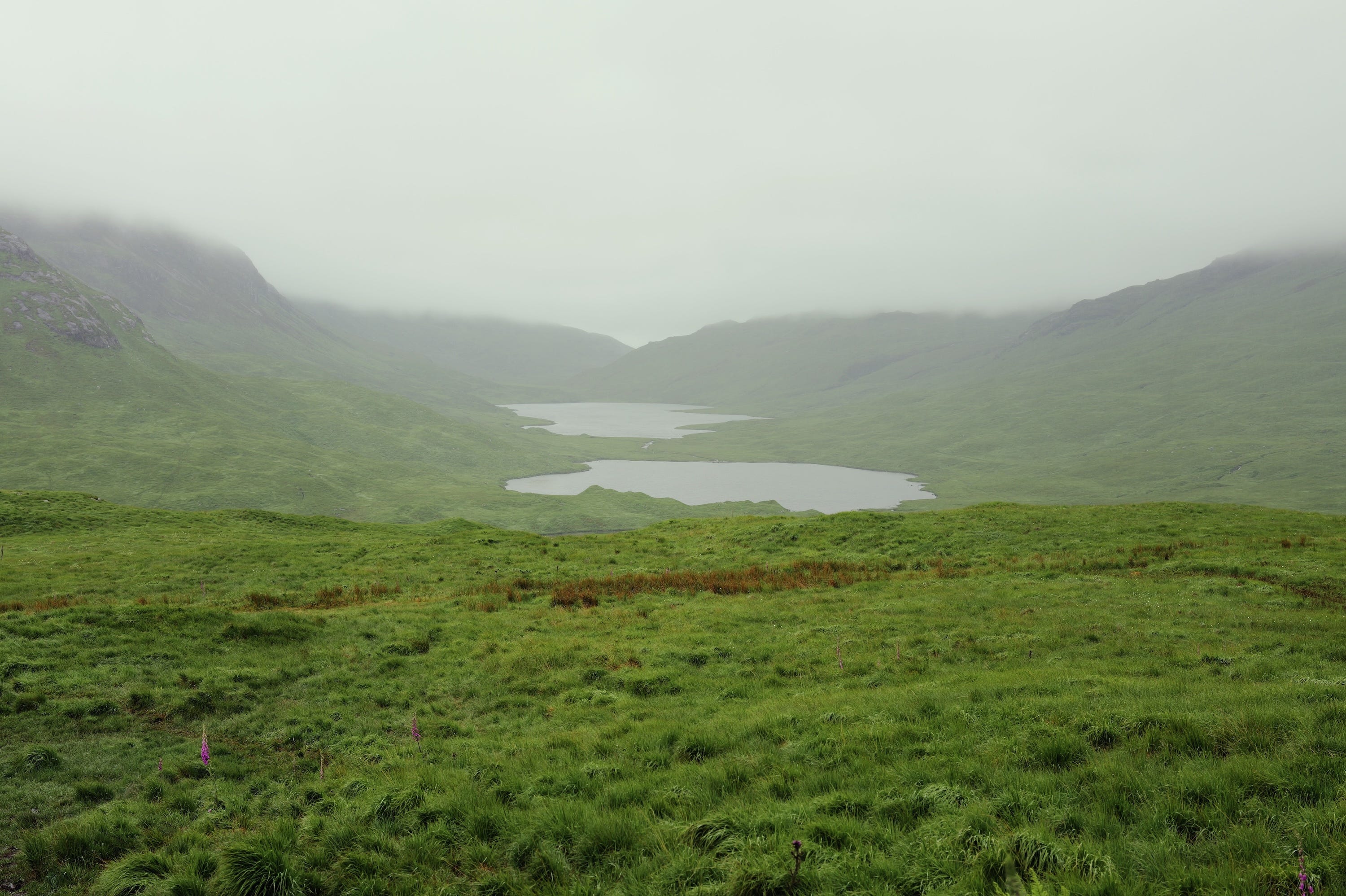
An hour up the road, I stopped at a farm shop I’d read about, near Glenforsa.
As I was leaving the car park, two carers flagged me down, a woman and a man in their thirties, their car sitting on a flat tyre a mile short of their next patient. Could I take them up the road?
One of them asked where I was from. Portugal, I said, twenty years in Britain now. They had made the same journey ten years ago, from Zimbabwe. Somewhere between the farm shop and Salen, the talk turned to the schools, and the woman told me she’d been to boarding school herself, back home. It’s not like this, she said. My parents knew what they were signing up for. They wanted that for us.
I dropped them in Salen and drove on north, thinking about that. The children of the south don’t get signed up. They get sent.
Annemarie’s mother was sent at eleven, in that first generation. You got back maybe once a month, if you were lucky, she’d told me at Amy’s table describing her mother’s years there. She just survived on her own, learning life skills from the kindness of other mums in Oban.
A generation later, the same arrangement reached for Annemarie, from a different angle. There was a time in her childhood when she lived on the island with her nana, her mum living elsewhere. And because her mum did not live on Mull, the hostel said the family would have to pay for Annemarie to board, thousands and thousands, or her nana would have to adopt her. There was just no way.
Annemarie is one of sixteen cousins. Her mother was one of six siblings, and most of that generation went through the hostel too. Now her son is there. The arrangement is not a policy to this family. It’s an inheritance.
And in the middle of it, there was Glasgow.
When her son was coming up towards high school age, Annemarie knew he could not board at eleven. I’m not saying it’s the same for every child, she said. Some are fine in first year. But you know your own child. And I knew he wouldn’t be.
So when a job came up in Glasgow, she took it, and she and her son left the island. It was sad, she said. But you look forward. New job, new city, we’ll find friends. They stayed away for years, and came home only when he was going into third year, fourteen by then, old enough to manage the weeks in Oban. Third year’s the sweet spot, she said. It’s still hard to settle, mind. You’re so used to being home with your mum, and then you’re not.
Annemarie and her son came home. Some families never do.
Rob and Owen had named a wider cost too, back at the croft. Communities like this one lose their working families, the people who do the work any community needs, because so many of them move away when a child turns eleven.
So carers can’t be recruited, Rob said. Which means the people who retired here find, in their last years, that they have to leave again.
Houses become holiday lets rather than homes. Businesses stay small, he said, because you can’t grow one if you have to factor in moving away.
Somewhere north of Salen, I remembered the recordings. The day before, Amy had taken my microphone on the school run, stopping at the gates, gathering voices for me. He’s after a variety of voices, she tells one of the dads on the tape. So the voices of the south rode north with me.
One of them was Chermaine, who runs a campsite in the south with her family. They built their house and put in the campsite. Now their plans sit on a shelf. We have all these things we want to do, she says on the recording, but we’re not doing them. They’d like to add water sports. They’ve seen what the café did for the place. We just don’t know how to grow the business, she says. We don’t know the future for the kids here.
Then Amy’s own voice, answering her. She has wanted to start a polytunnel for years. Three grand, a decent one that won’t blow over in the storms. She’s always too busy, she says, but it’s something else too. By the time my soil is at its most perfect state, I’m going to go.
Back at the croft, Rob had put this into context.
In the nineteenth century, landlords across the highlands and islands forced tenant families off the land to make way for sheep. Whole towns on Mull were emptied, some of them on the Ross itself. The Gaelic-speaking communities of the island never fully recovered.
The history of crofting, Rob had said, is the history of land used as a tool of oppression. There are links between the Clearances and this. Because the education situation has cleared families from this land too. There are families who no longer live here, because they wanted to live with their children.
Crofting law itself was written in the aftermath of the Clearances, to keep the land in the hands of people who live on it. A crofter is required to live on the land in order to work it. And yet, Rob pointed out, if you prioritise your family life, you can’t live here.
Amy had told me about the pool. When the girls were small, she would get in the water at Craignure with them, and so would the other mums, from Tobermory, from Salen, from Dervaig. An hour in the pool together, then a coffee after.
Some lovely friendships started that way, she said. And then they faded. You get busy. But it’s not just busy.
There’s that divide, Sam said. There’s that divide, Amy agreed.
If all those mums knew their children were going on to high school together, she told me, we’d all make so much more effort to get together, to make those friendships bond. The whole island would be so much more together.
Then the road dropped down into Tobermory, the painted houses along the harbour, the end of the island.
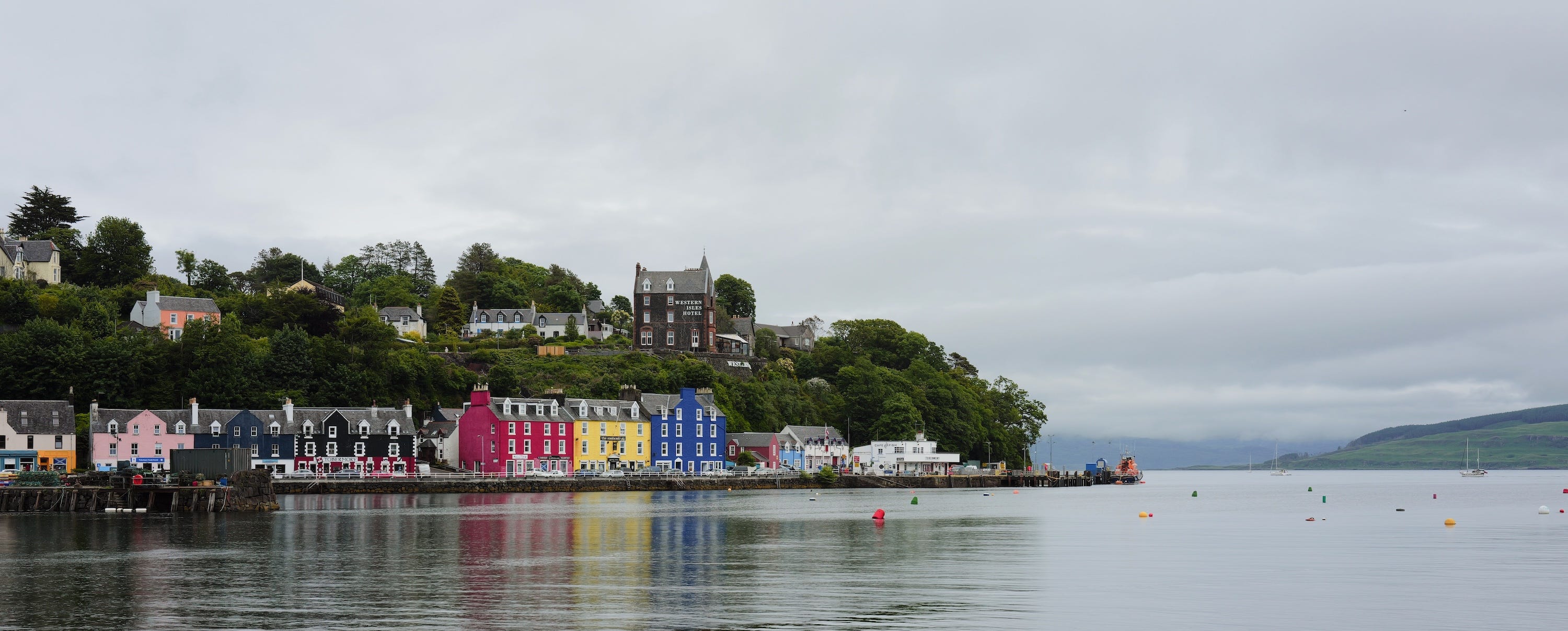
It was here, at the Provincial Mòd, the Gaelic music festival, that every primary school on Mull gathered on the beach last September and sang the same song, one they had all learnt. Amy was there, watching all the island’s primary children singing together. And she thought about what happens to them at eleven, she told me.
The children of the north and the middle go on to high school in Tobermory together, the same faces from the beach. The children of the south go to high school too, but across the water, and the friendships made in that choir end there.
The story in Balamory
I drove into Tobermory with a song in my head. This is the town where they filmed Balamory, the BBC children’s programme about a brightly coloured island village where every day brings a problem and every problem is solved by teatime. The theme tune has never left me. Since I started working on this piece, my children have taken to asking me the question that opens every episode. So, what’s the story in Balamory?
I had come to ask the town exactly that. I tried, in the local museum, in a restaurant and a couple of shops, to bring up the school. Each time, the conversation went somewhere else.
How did we get here?
Rob told me the story, the way it has been told on the island for as long as he has known it. A long time ago, when it was decided where the island’s high school would go, the vote split exactly down the middle. Central, or Tobermory. The man in the chair had the casting vote. He was a Tobermory man and he cast it for Tobermory.
The man would have been a provost, Rob thinks, from the years when Tobermory still had its own council. I went looking for the vote and could not find it in a record. Nobody could give me his name. On the island, it is told as fact.
For Tobermory’s children, a central school would mean a bus south to Craignure, half an hour each way. For the children of the Ross, depending which end they start from, it would mean somewhere between forty-five minutes and an hour and a half on the bus, and then home to their families at the end of it.
In 2022, the council held meetings on the island and put a bid to the Scottish Government for a new school. The bid succeeded the following October, paid for by a government loan the council would have to repay.
The families of the south knew where they wanted the school. Craignure, at the middle of the east coast, where the island had already put the things it wanted everyone to reach. The hospital. The pool. The ferry to the mainland. The landowner there, the campaign says, offered the site as a gift. It was level and large enough. Months later, in the council chamber, one of the council’s leaders would dispute that anything comes for free. The site came with conditions, he said, and paying for the surrounding infrastructure would be the council’s responsibility.
The meetings went on for two years. John Maughan, the convenor of Mull Community Council, remembers what the island was told at them. Don’t worry about location, nothing’s decided. They went and spoke to people down at the far end of the Ross, he said. They asked children what colour they would like their classrooms.
The condition had been in the bid all along. In September 2024, the community understood what it meant. It was funding to replace an existing school, like for like. The only existing school was in Tobermory.
Islanders proposed splitting the sites: a new high school in the centre, Tobermory keeping its primary. That December, councillors were asked to confirm they would not consider it. Not affordable, the council said in its press release. The funding would pay for nothing twice, no second dining hall, gym or playing fields.
Three months later, on the 7th of March 2025, the councillors met to choose the site. Annemarie was in that room.
She had told me about it over dinner at Amy’s, days before I ever read the transcript of the meeting. The Mull Campus Working Group, the people running the campaign for a central school, had asked her to speak.
A deputation, it’s called. She didn’t know what one was. The campaign wanted her because she cannot be dismissed as an incomer. Her family has been on the island for generations. Lived experience, standing at a lectern.
She’s terrified of public speaking, she told me. She genuinely hates it.
And there was the other pressure. How am I supposed to speak for a whole community, she said. You can’t. You’re not going to get everyone in agreement. She had minutes to try.
So Annemarie didn’t speak for them. She stood up in the chamber and read their words instead.
Many of us on the island can remember not having electricity or mains water. Should we have just kept the status quo then?
I just want to live at home and bring up my children around my family, and live in a house that we have built, instead of letting it as another holiday home.
Empty nest syndrome arrived too soon. I wasn’t ready.
Annemarie shared more messages from parents. The councillors listened. One of them called it the most powerful deputation she had ever heard in that chamber.
Then they accepted the recommendation. The one their officers had put in the papers before them.
The preferred site for the new school was in the north.
Again.
The Working Group took the council to court. A judicial review, arguing that the decision had been taken without a vote, that the Craignure site and its offer of free land had never been properly weighed, that the consultation had not met the national standards for one.
This February, the court found the council had acted lawfully in how it decided. The meetings had never been a consultation in law, the judge said in his published opinion, only engagement, so the standards didn’t apply. The council had argued exactly that: no one was entitled to a consultation on the choice of site, and nothing more was required.
The plan resumed. And because the school is moving, there now has to be a proper consultation. About moving the school to the new site. Not about where the new site is.
Back at the croft, I had put the ruling to Rob. According to the court, I said, the council did everything it should have done.
No, Rob said. It’s really important to be clear. It’s not that they did everything they should. What they did was within the law.
This March, two scholars of human rights law looked at the same facts. Professor Katie Boyle and Dr Michelle Donnelly of the University of Strathclyde, asked by the community and working unpaid, set out their opinion of what the arrangement is in law.
A child boarding in Oban, the scholars wrote, is in alternative care, in fact and in law, five days of every seven, 179 days a year, most of a childhood from eleven onwards.
In international law, they added, separating a child from their family is meant to be a measure of last resort. Case by case. Temporary. Kept under review.
The court had not been asked whether the decision was right, or what it does to the rights of a child. Those questions, the lawyers wrote, remain unanswered.
The island does not shout about the school. Part of it is how small places work, Annemarie told me. They say, don’t stick your head over the parapet. You rely on each other on an island, so it is easier not to fall out over things.
She told me about the people who tell her quietly that they want the school in the middle and cannot say so in public, because of where they work.
Amy’s eldest daughter is four years from the boat. Amy has never talked to the girls about any of it, and told me that she and Sam probably wouldn’t even if the girls were older. When your child is in the run-up to leaving, she said, you keep that as positive as you can in the household, to give them the chance to have the best start
Parents cannot say it in public either. Not because of the council, because of the children.
The boat is still coming.
There is a price for that silence. It gets counted. Politicians use that count, Annemarie says, those tiny numbers, to call the campaign a minority.
The campaign wanted to know what the island actually wanted. They had asked Argyll and Bute for help running a proper ballot, the campaign says. The council’s published position is that a site cannot be chosen by ballot. So Annemarie wrote a survey herself. It went out under Mull Community Council, the island’s own elected body, not the one that had been deciding everything else.
Six hundred and sixty-five people answered. A third of them lived in Tobermory, which is roughly the share of the island that does. Nearly two-thirds wanted the split site that the council would not consider. Fewer than a third backed the shape the council chose.
They have not run one of their own.
Out of sight. Out of mind.
In Tobermory, where the school conversations had gone elsewhere, there was one man who wanted to talk. I found him in his own bookshop.
Duncan is a PE teacher with grandchildren here, and the force behind the island’s swimming pool. What he wanted to talk about was a sports hall for Mull’s children, one the island is still trying to build.
A generation ago, when the island had no sports facilities at all, the children of Mull were asked where a playing field should go. They chose the middle. A stretch of waste ground at Garmony, between the island’s two ferries, where everyone could meet. The islanders built it themselves and have maintained it ever since. There has never been council money there.
The pool took twenty-eight years, by Duncan’s count. His committee wrote to the council every year and heard nothing back. They didn’t just ignore it, Duncan says. They physically wrote against it. Nobody said why for twenty years. It was the running costs. A hotel agreed to cover them, and the pool was built at Craignure, in the middle.
John told me about the same pool. People in Tobermory still tell him it should have been theirs, because it would have been used more. It would have been used more, he says. But that is not why it was built. It was built to provide a pool for the people of Mull and Iona.
This spring, Duncan and his committee asked the council to back the hall. It declined. There was not enough money for all the bids, the council said. Both of Mull’s own councillors had supported this one.
The islanders are raising the money themselves. Again.
Duncan’s campaign takes no side on the school. It isn’t the people in the council, he says. Individuals come and go. It’s a culture. A mainland culture and an island culture, and we’re out of sight, out of mind.
In June, the island’s institutions did what its parents cannot. Four community organisations, from the north-west of Mull to the south-west, wrote an open letter to the council’s chief executive. John’s name is at the top. They asked for the decision to be reassessed, and for the funding rules to be changed, so that they can take account of islands.
As I write, the council has not replied. In Edinburgh, meanwhile, the First Minister, John Swinney, has promised a full review of the funding programme.
People have been talking about a central school for decades, John said. It’s more than once in a generation. If they build it in the wrong place, that’s it for another fifty, sixty years.
On Friday, I left Mull, back across the water to Oban. And when I came off the ferry, they were there on the pier, waiting to board the boat I had just stepped off. Bags packed for home.
The ferry boat children.
At the wheel of an empty bus
Every school day, Amy drives the school run. I couldn’t go with her. So on the Wednesday, she clipped my recorder to her jacket and drove.
The tape begins on the way back, the bus empty, the long road down the Ross. At the gates and the road-ends were the parents who wanted to speak, and one by one they did. Some of those voices you have already heard.
One father chose the island knowing what it lacked, and said so straight out. Things move on, things change, and there was an opportunity to look at everything properly, a proper exploration of all the possibilities. It never happened. There’s probably a solution somewhere, he said. And that opportunity seems to have been missed.
Another spoke about his daughter. Fourteen, at the hostel, with a phone. The bullying arrived in her hand, at night, in a building where there was no one she could realistically talk to. Her mum and dad were a ferry away. A ferry that doesn’t run at night.
After the last stop, alone, Amy played Siobhan’s voice note.
It keeps me up at night thinking that I might have to put my child through the same trauma that I went through, and I cannot do that to her. If the school is not built centrally for all of the children on the island, my only option would be for me to move away.
The voice note ends. Amy is crying, alone, at the wheel of an empty school bus.
Then she gathers herself. She always has, since we were at university together. And she speaks. To the van, or to the recorder, or to nobody. What follows is exactly what the tape holds, word for word, gap for gap.
It just makes me so emotional...
Listening to that, and to all the others...
Oh dear...
Chermaine’s little girl, Sophie’s… little best mates with my little girls, Rosie and Erin.
And they’re gonna... end up... you know...
Amy never finishes the sentence.
I gave Argyll and Bute the opportunity to respond before publication. The only response was to direct me to their website for more information.
For my free subscribers: a note about this story
If you aren’t a free subscriber yet, please sign up here to get access to this extra.