

Looking for Zena
A flight to a Regency seaside town on the Jurassic Coast, and a quiet question about love and direct debits.

The podcast version of this story, with the sound of the wind, the donkeys, and Donna’s voice, is available at Apple Podcasts, Spotify and here.
Photos by Fernando Pinho and Simon Horn.
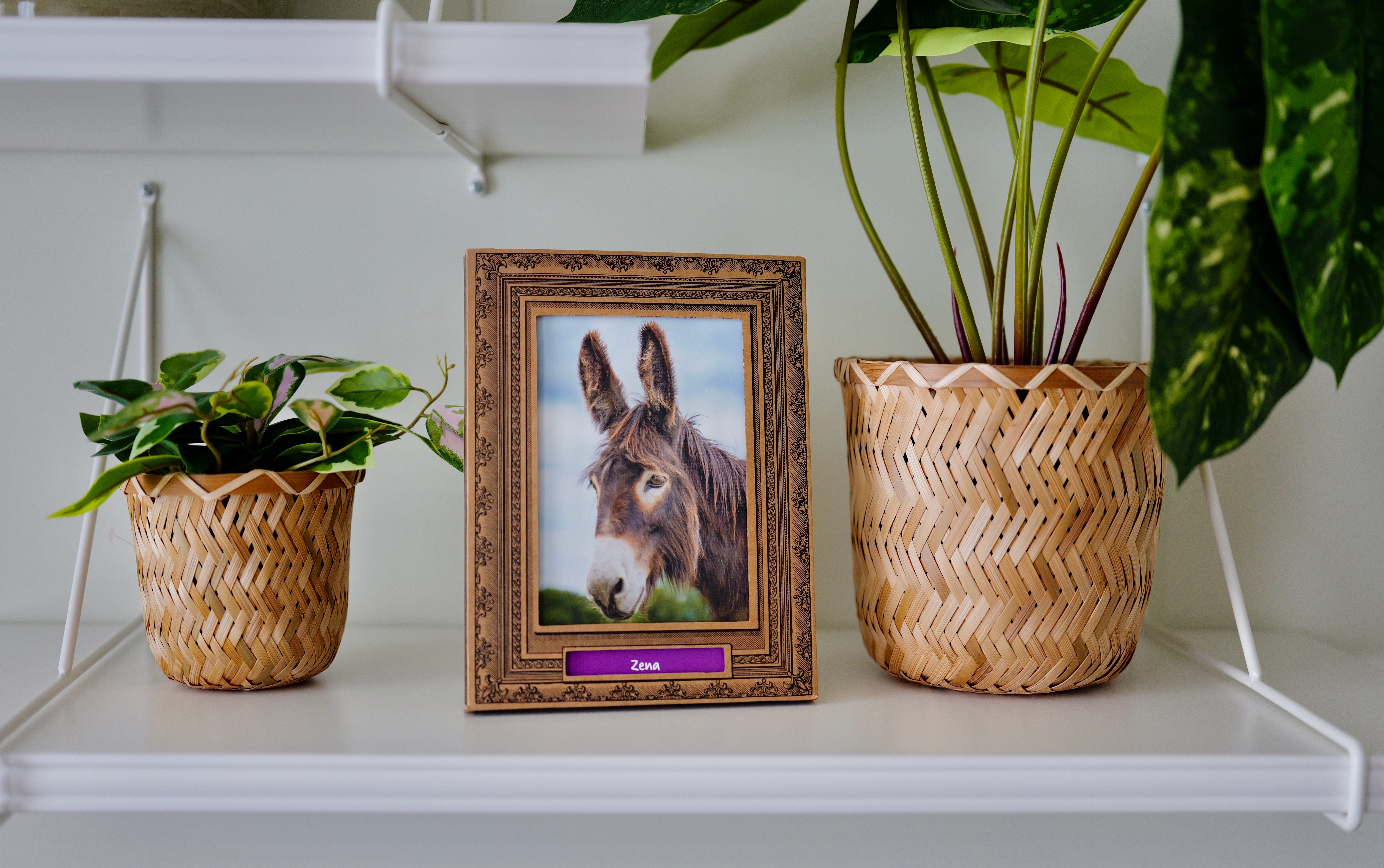
There is a photo of a donkey on the wall of my office.
She’s brown. A little smaller than you’d expect. She has a pair of large, fluffy ears and the soulful eyes that donkeys have when you look at them properly, which most people don’t. Her name is Zena. She is seventeen years old, she lives in Devon, and for the last year I have been paying a small amount each month towards her care.
I have never met her.
She doesn’t know me. She doesn’t know what month it is. She doesn’t know about the direct debit, or the photo I have of her, or the slightly mad fact that I have called her my daughter to strangers at parties when nobody knew quite what to say. I tend to talk a lot at social events. This isn’t voluntary.
She has, I have since discovered, thousands of other adopters. Adopting fathers. Adopting mothers. People who, like me, have a photo on a wall or a fridge somewhere and a name they know without having to look it up.
Most of them have never met her either.
•••
About a year ago, my wife got me an unusual gift. She had noticed me watching videos of donkeys on social media, which, in my defence, is a completely reasonable thing to do, isn’t it?
So my wife went online, found the Donkey Sanctuary near Exeter, and adopted a donkey on my behalf. A few days later, a certificate arrived. A framed photo. A name.
I put the photo on the wall in my office and I kept paying the monthly fee.
And then a year went by. And I never visited.
It bothered me, eventually. Not in the way you might expect. I wasn’t lying awake feeling guilty about a donkey. But there was something quietly off about the situation. I had built a friendship in my head with an animal who had no idea I existed. I thought about her sometimes when I walked past the photo. And I had never once made the short flight to Devon to see her.
So one Thursday in spring, on a sunny and free afternoon, I went.
•••
The question I was carrying with me as I flew south was a strange one.
What does it mean to love something that doesn’t know you exist?
We do it all the time, when you think about it. We love places we have visited once and still think about. We love causes we quietly support from a distance. We love writers and musicians we have never met. We love the version of a friend we have in our head, which is not always the same as the one in front of us. We carry these things around with us. We let them shape us. We pay for them sometimes with money, or time, or attention.
And the other party, more often than not, has absolutely no idea.
I was hoping on the flight down that the question would answer itself once I was standing in front of her.
It did, in the end. But not in any of the ways I had planned for.
•••
After a tranquil flight at 6,000 feet, I landed at Exeter just after eleven in the morning. Air traffic control instructed me to park on the grass. This is the option used by pilots who choose not to pay for the handling service. If you are curious, the handling service is a free Diet Coke and a thirty-second minibus transfer from the aeroplane to the terminal.
What I had not expected was to step out of the plane to the sound of dozens of birds who had also chosen to park on the grass. That was the most rewarding welcome I’ve ever had, even after having declined the minibus.
Exeter Airport is small and friendly, the kind of place where you are through arrivals and in a rental car in ten minutes. Seventy pounds for the day, which is not nothing, but as landing fees in international airports go, you take what you can get.
I had thought about spending the morning in Exeter itself. The Cathedral has the longest uninterrupted Gothic vaulted ceiling in the world, and the Roman walls, built in 55 AD, are still standing. But I wanted to get to Sidmouth in good time, so I picked up the car and headed southeast.
About two minutes out of the airport and you are properly in Devon. Narrow lanes. Ancient hedgerows pressing in on both sides of the road. The road surface, in a quiet revelation that I genuinely was not expecting, had no potholes. I had almost forgotten what that felt like. And despite the fact that I was driving with all the windows up, I could still hear birds chirping along the way.
Twenty minutes into my journey, between hills covered in old trees, I turned right into a sign bigger than any I’ve ever seen, saying “Sidmouth.” And a few minutes later, there it was.
The sea.
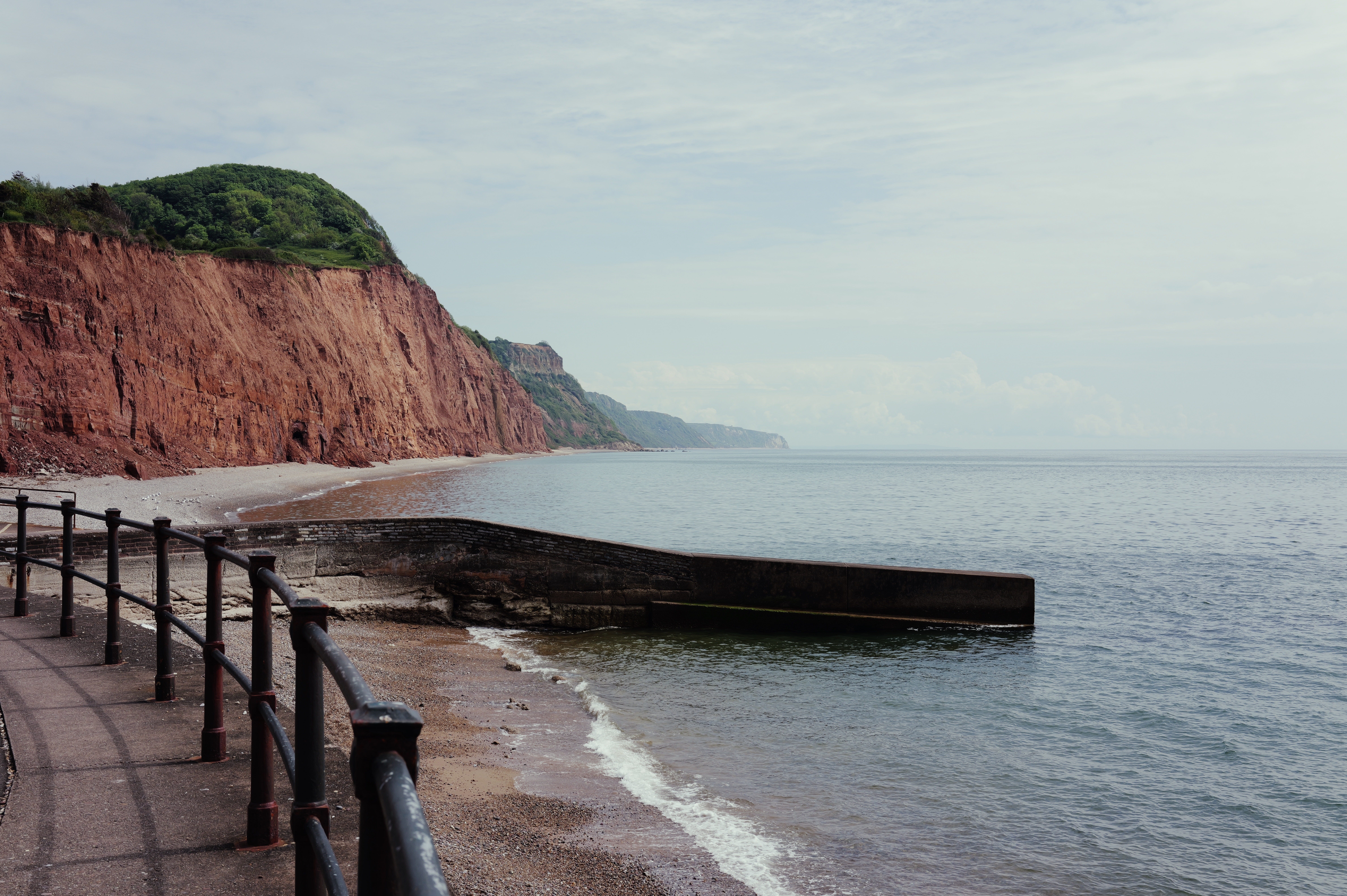
I grew up by the sea in Portugal. I saw it almost every day for thirty years. And it still gets me, every time. I believe it’s because just like when I’m flying, it reminds me that the horizon is so much further away than I think.
The English Channel was glittering in the early afternoon sun. To the east, the red sandstone cliffs that the Jurassic Coast is famous for. The Triassic stone, 250 million years old, was deep rusty red against the blue. Sidmouth was tucked between the cliffs and the water, as if some Georgian architect had placed it there as part of his master plan.
I parked the car and walked along the Esplanade. It’s a short walk, no more than ten minutes. I saw mostly elderly people and dogs. People sitting with a coffee and a slice of cake, or sitting on a bench looking towards the sea.
Sidmouth has been called ‘God’s waiting room’ over the years, on account of its older population. I disagree. In this town you feel alive. You have to, if you intend to walk some of the most challenging and stunning stretches of our coast.
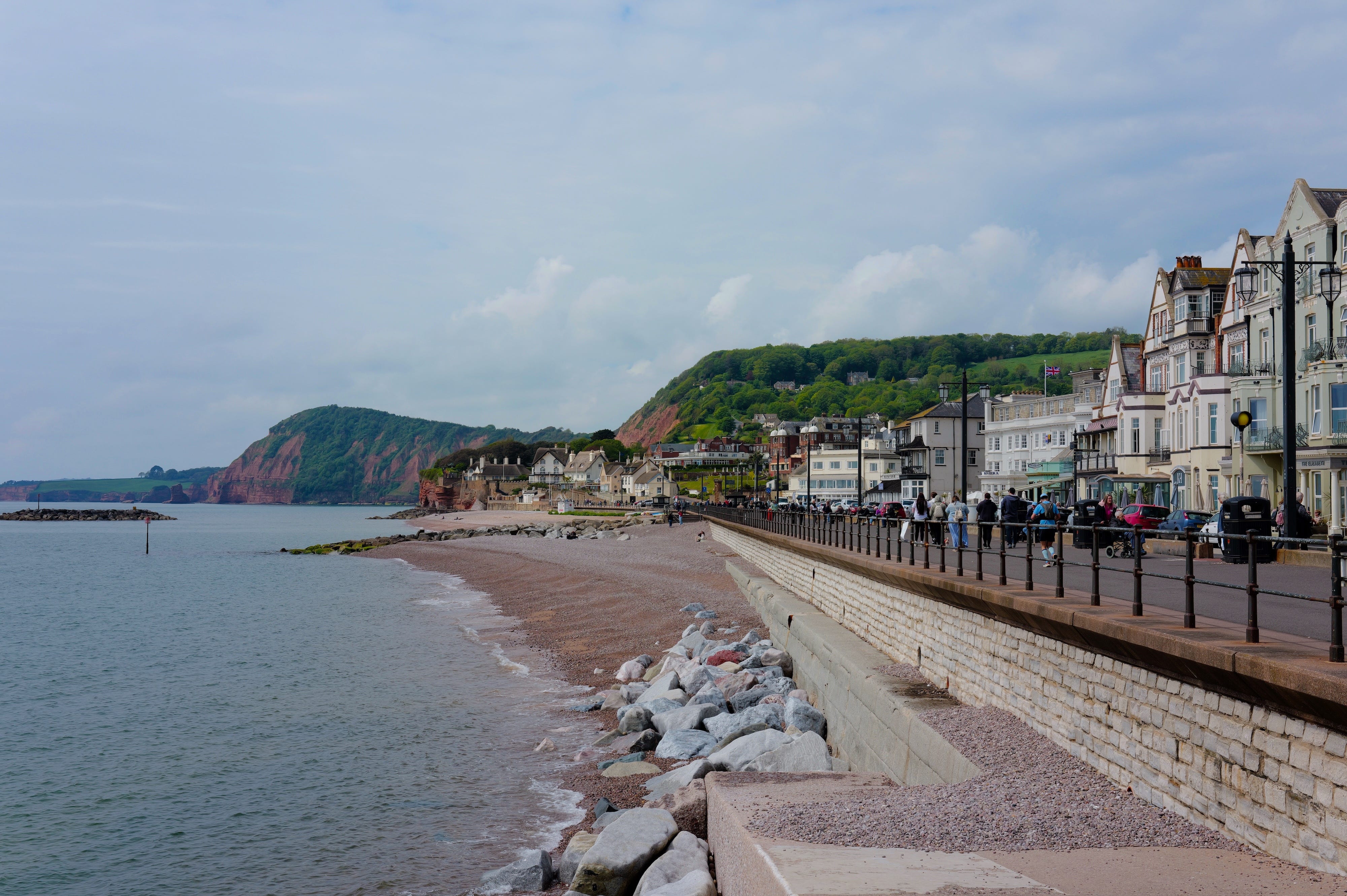
The frontline buildings are still original, Georgian and Regency, mostly. White and grand and looking out over the sea as they have for two hundred years. It was all so quiet, despite the number of people about. Sidmouth is the kind of town that has somehow resisted the urge to become anything other than itself, and is much better for it.
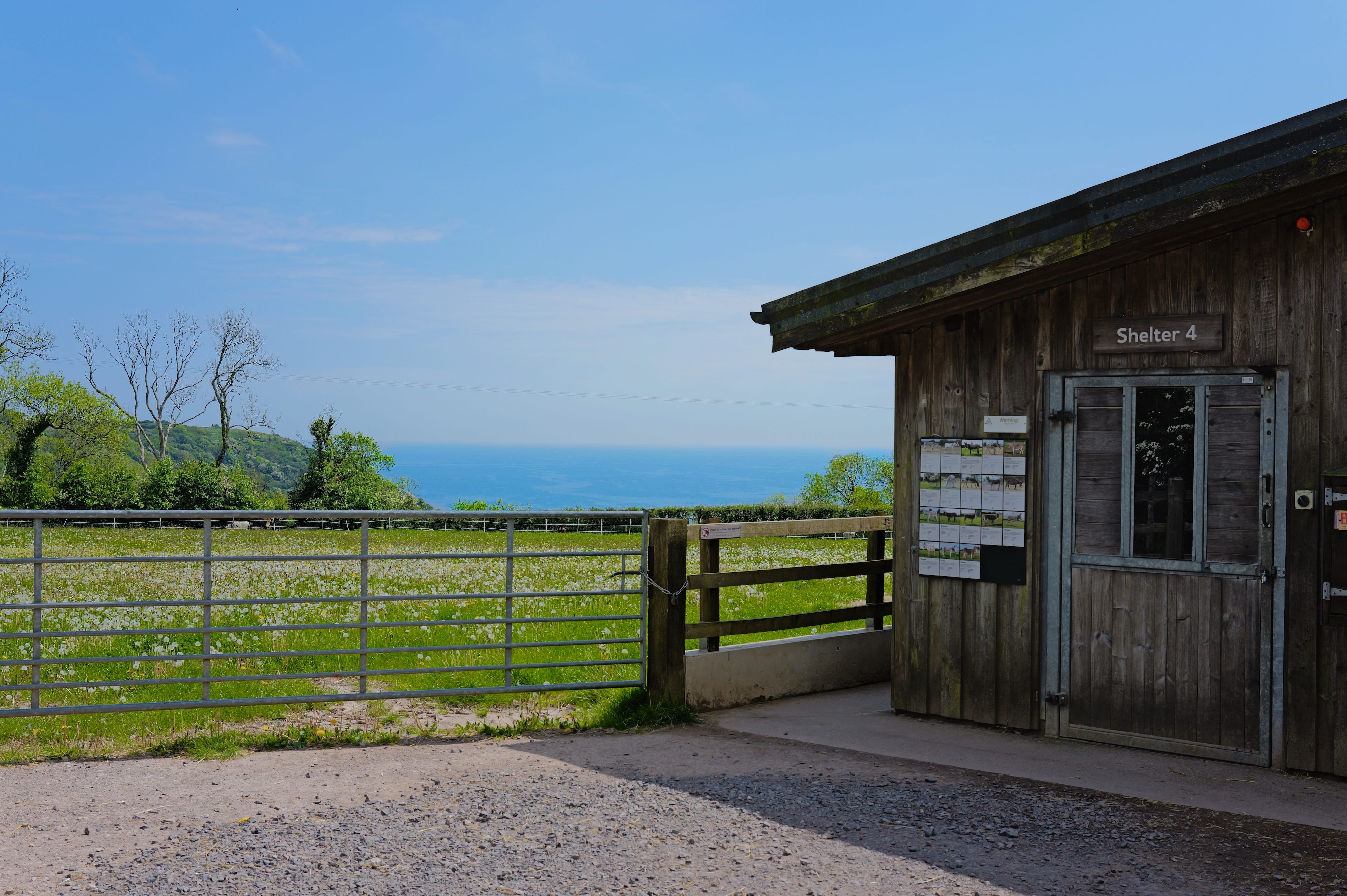
The sanctuary was up on the hillside, just above the town. The South West Coast Path runs right past it, and I had thought I might walk a stretch before going in. But I had a donkey to find, and I was beginning to feel nervous.
Which, when I stopped to think about it, was the strangest feeling of the day.
•••
The Donkey Sanctuary near Sidmouth is enormous.
I want to be clear about this, because most people picture a field with a few donkeys and a gift shop, and that is not what it is. The site is 132 acres. It can hold up to 250 donkeys, and there are six more farms in Devon, with thousands of donkeys between them.
The sanctuary operates in over 35 countries. It is one of the largest animal welfare organisations in the world.
Entry is free. It is open every single day of the year, including Christmas Day.
I had pre-arranged a chat with Donna, a member of the visitor services team, who has been at the sanctuary for eight years. She used to work in cosmetics.
Donna has the kind of warmth that you cannot fake, the kind that makes you want to keep her talking.
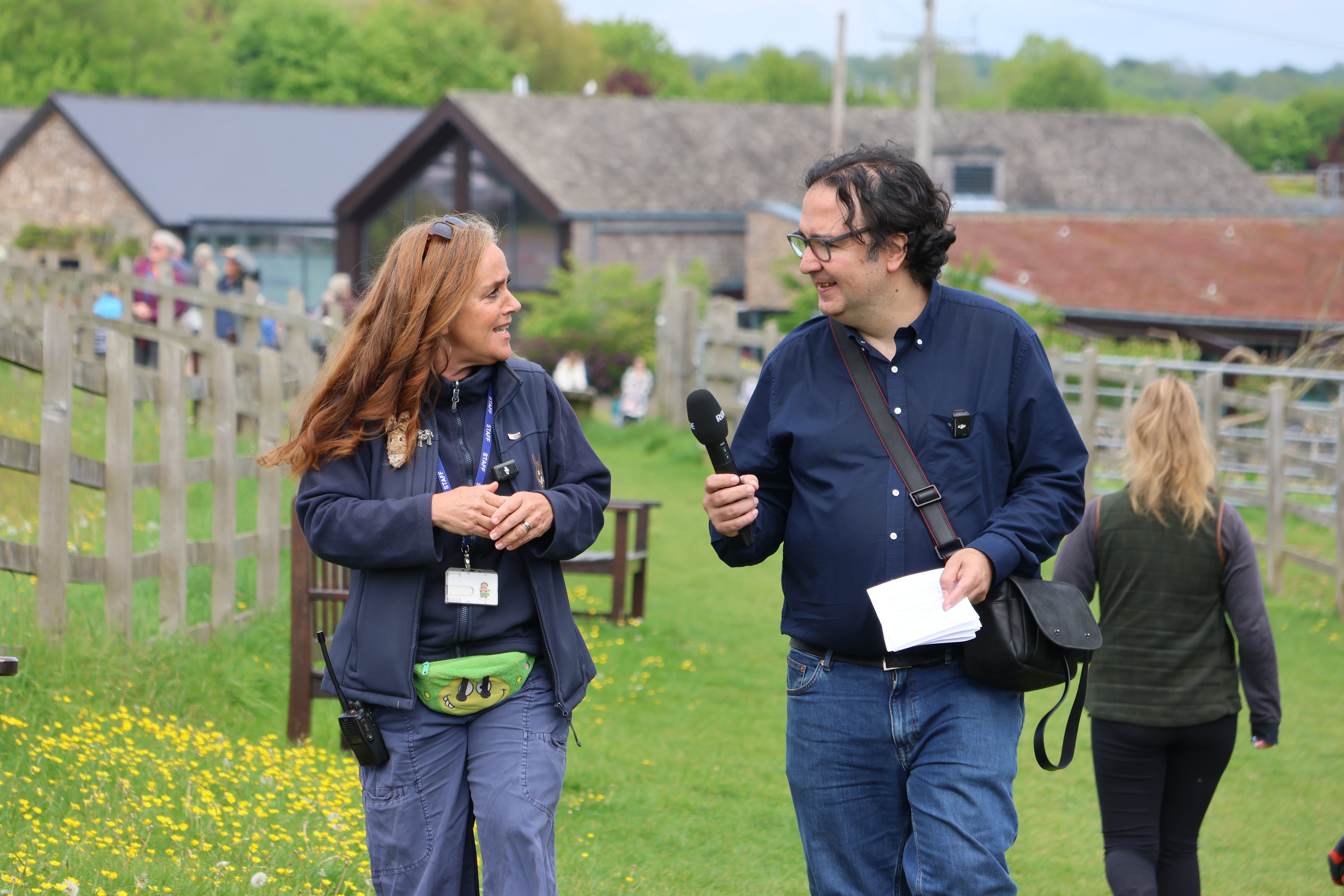
We walked slowly up through the fields towards the area where Zena lives.
I asked her things I thought I already knew the answer to.
I had read that donkeys were intelligent, that they had long memories and that they bonded for life with other donkeys. I had read that they grieved. I knew about elephants, but not about donkeys. Donna confirmed all of it and added something I had not known. When a donkey at the sanctuary has to be put to sleep, through illness or old age, they do not take it away from the herd to do it. They sedate it where its companions can see. The donkey lies down and dies, and the others come over.
They will tap the body with their hooves, sometimes, as if to wake it up. They will stand near it. Some of them will walk away after five minutes. Some of them will stay for hours. The grooms wait. They do not move the body until the donkeys have decided it is time. If you took the body away too soon, Donna said, the surviving donkey wouldn’t understand. They would pine. They could become very ill. Hyperlipaemia, she said. It can be fatal.
I asked if donkeys bonded only with other donkeys or with other species, too. She said they bonded with whoever was there. One donkey had once come into the sanctuary with the cow she had been raised alongside. The cow was called Crumble. They had to come in together because separating them would have killed the donkey.
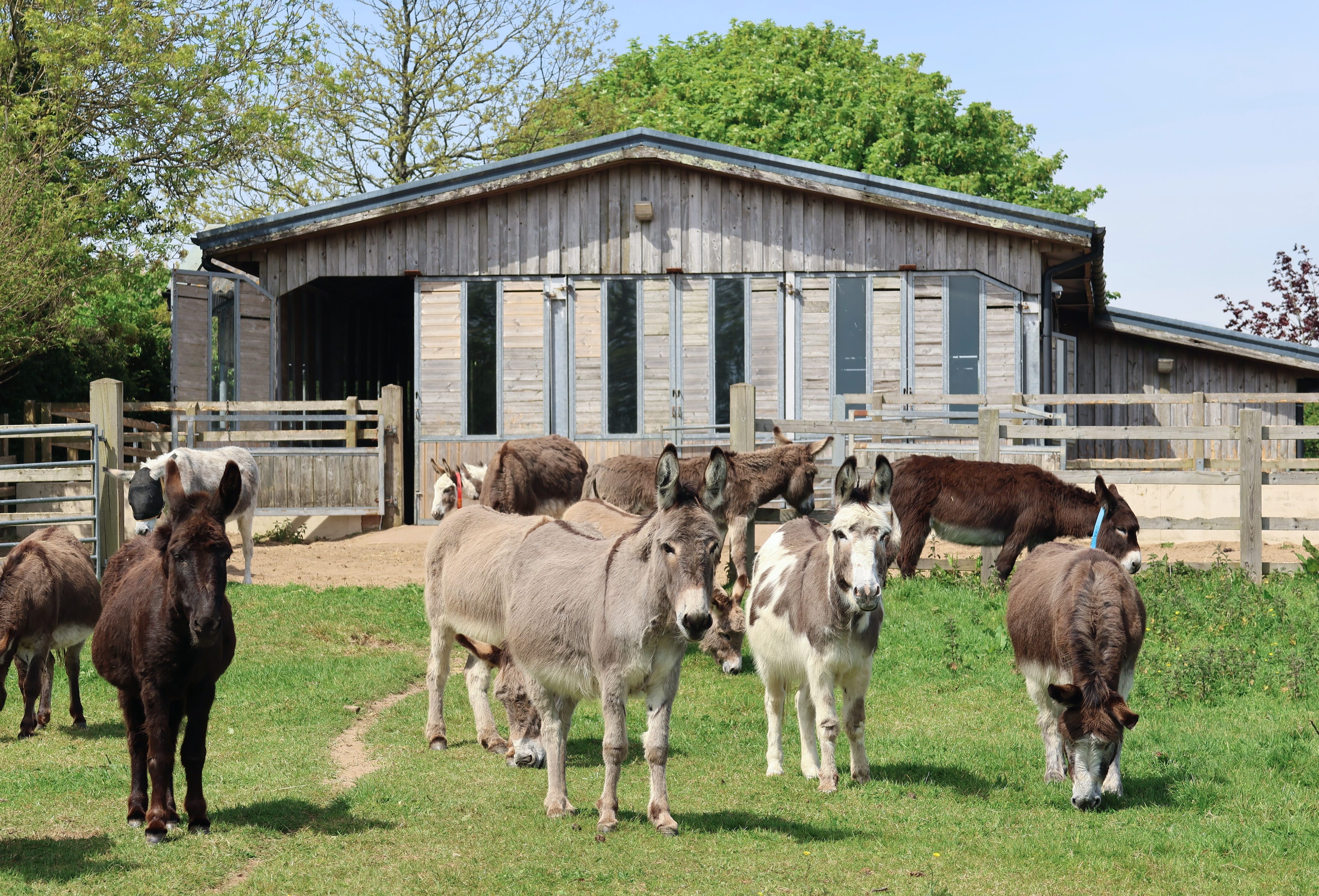
We talked about the adoption scheme. Donna said thousands of people adopt each donkey, so no, I’m not Zena’s only adopting parent. The £48 a year doesn’t all reach Zena. A chunk goes back into producing the certificate, the photo pack, and the newsletters. But, Donna said, it generates the constant trickle of income that keeps the sanctuary running.
A significant share of the charity’s welfare work goes overseas, to the working donkeys in countries like Ethiopia, Kenya and India, who carry water and crops in some of the poorest communities in the world. And then Donna said something I had never heard before. It was, I have to admit, quite gloomy.
If you don’t have a donkey, you are a donkey.
In those communities, she said, if a family does not own a donkey, the woman becomes the donkey. She carries the water. She carries the crops. She walks the miles. Her children stay home from school to help her.
The £4 a month leaving my account in Cambridge is not really feeding Zena. Zena would be fed regardless. It’s joining the wider stream of money that keeps the whole charity going. Some of it stays in Devon. Some of it reaches the working donkeys in Ethiopia, Kenya and India.
I don’t think I had understood this until Donna said it out loud.
•••
We walked around to the field where Zena lives. I could see her from about thirty metres away. Brown, slightly smaller than the others, standing with her oldest friends, Ashley, who has been her companion since they were both born here seventeen years ago.
She did not come over.
I stood at the fence for twenty minutes. I called her name a few times, quietly.
Donna had told me earlier that the more you tried to get a donkey to come over, the less likely they were to do it, so I tried not to try. Zena, for her part, did not try anything. She grazed. She was busy being a donkey.
I felt, briefly, a little silly. I had flown here. For this. Why was that important?
We moved round to the other side of the field. From the new angle you could see her better, but she still didn’t come. Ashley came over instead, and let me scratch him for a while. He had one eye, the other lost last year to a corneal ulcer that wouldn’t heal. He didn’t know me either. But he was there.
After a while, I thought, Okay. This is the story. She isn’t coming. And that’s fine. The story I have been telling myself about Zena doesn’t actually require her to know me. I had worked that out on the flight down. I could stand by it now.
So I started to walk away. And then Donna shouted my name.
“Fernando! Fernando!”
I want to tell you that Zena recognised me. I want to tell you that as I turned around there was a moment of mutual something, that the year of paying and the photo on the wall had been quietly noted somewhere, and that here, finally, was the moment we had both been waiting for.
But that would be dishonest.
She came over because she’s a donkey, and donkeys sometimes come over for reasons that have nothing to do with you. Curiosity, probably. The way the light was. The fact that I’d stopped calling her name. Donna had even predicted this. The more you tried to make them come, the less they did. The moment you let go, sometimes, they would.
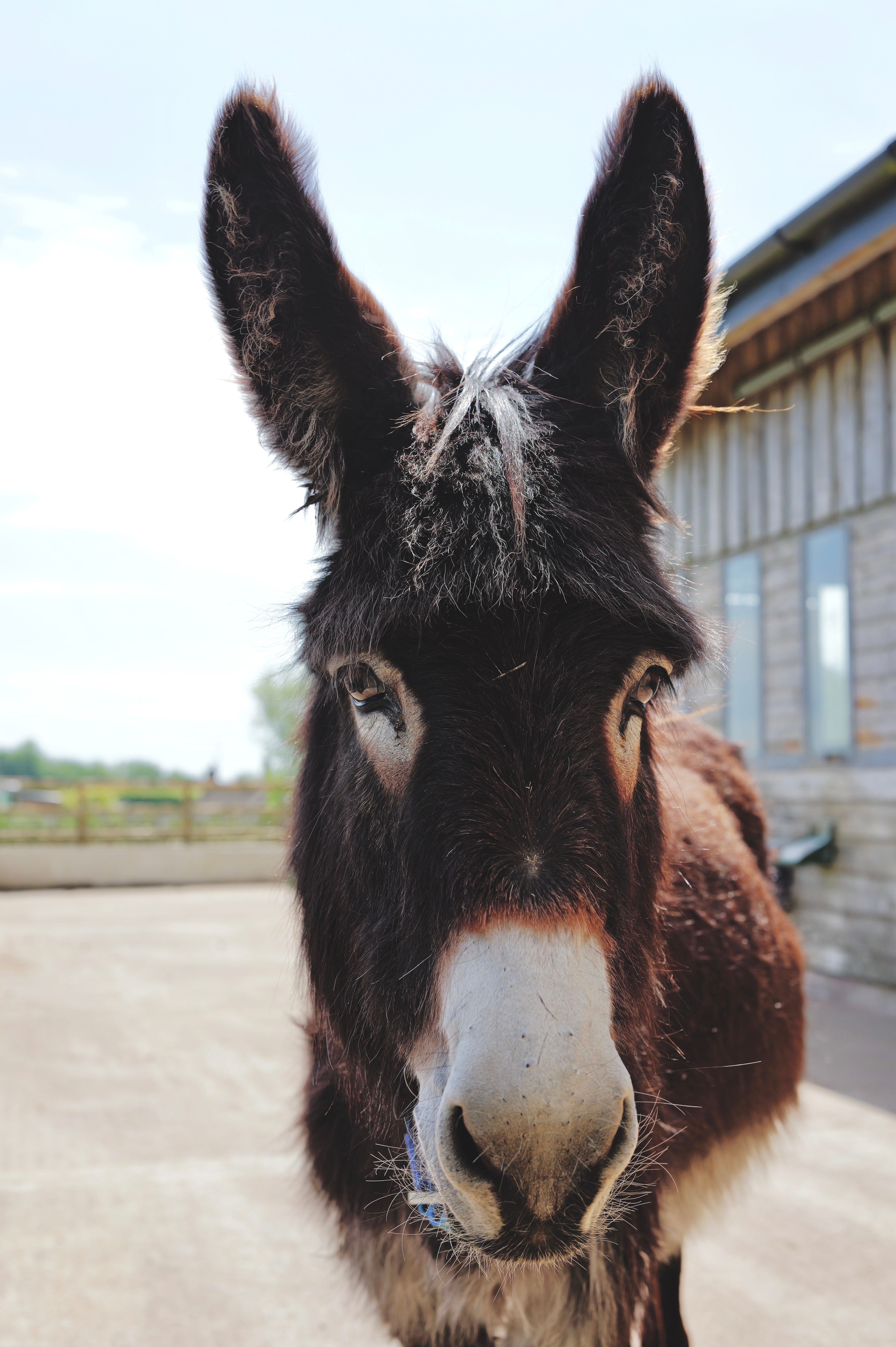
What I felt was not recognition. I’m not even sure I could call it a connection. It was something quieter. The fact of her being there, at the fence, right in front of me. The blue collar. The eyes that all donkeys have, that take your attention without asking for it.
I scratched her on the withers. She let me. She sniffed me, in the way Donna had described, the way donkeys groom one another, mouth-to-fur, which is reserved for bonded friends. I’m not sure she was treating me as a bonded friend. I’m not sure she was treating me as anything at all. But she was there.
I sat with her for a few minutes longer. And then I left.
•••
I have been turning it over since I got home.
For a year, I have carried a small version of Zena around with me. A photo. A name. A monthly direct debit. A donkey I have built into something in my head.
The real Zena is in a field above Sidmouth. She does not know me. She has her own life, her own companions, her own seventeen years of being a donkey that have almost nothing to do with mine.
I thought, before I went, that meeting the real Zena would somehow replace the small one. That the photo would become the donkey, that the imagined relationship would either be confirmed or quietly dissolved.
Neither of those things happened. I came home with two donkeys. The one in Devon, who does not know me. And the one in my office who I keep with me.
Both of them, I think, are real.
The one in the field is obviously real. She has hooves. She has friends she has known since birth. She has her own life. The one in my office is real, too. She is the one I think about. She is the reason I flew to Devon. She is, in some small way, the reason a child somewhere is at school today instead of walking to a well.
The small version isn’t a substitute for the real one. It’s something different. Something that lives in me.
I don’t think I’m alone in this. I think we carry small versions of all sorts of things. The place we visited once and still think about. The cause we quietly support. The person we admire from a distance. The home we grew up in that doesn’t exist anymore. We build small versions of these things and we keep them alive, and we show up for them in small ways, and they show up for us.
The sanctuary understood this before I did. They give you exactly enough to build something. A name, a face, a few updates a year. What you build with that small material is the thing the money really sustains. The version of Zena that lives in your head, wherever you are in the country. And, through her, the donkeys that aren’t here.
I’m going to keep paying. I’m going to come back to Sidmouth, with my wife and our girls. I’m going to tell anyone who will listen about the work the sanctuary does. Places like that are meant to be shared and supported.
And the small version on my office wall is going to carry a new moment in it now.
The moment Zena came over. The fact that she did not know me, that she still doesn’t, that she will never know I’m writing this.
I think that’s fine.
My mum works in the Donkey Sanctuary adoption team and sent me this to read as it had left her with tears in her eyes this morning. Such beautiful writing - donkeys are such amazing animals.