

The Yellow Lines
On the Barbican, the Guildhall School and the places that keep calling you back.

Alongside this article, we’re publishing a companion episode of our immersive podcast dedicated to the Barbican. You can listen to it below or in your favourite podcast app. Just search for Travel Plans with Fernando Pinho.
In 2007, I moved from Portugal to the United Kingdom. I was thirty-one. I’d already had a life, of sorts, and I was choosing to start another one.
The reason on paper was a place at the Guildhall School of Music and Drama. The real reason was that I felt my dreams couldn’t live in Portugal. I couldn’t find a home for them there. I needed to go somewhere they could.
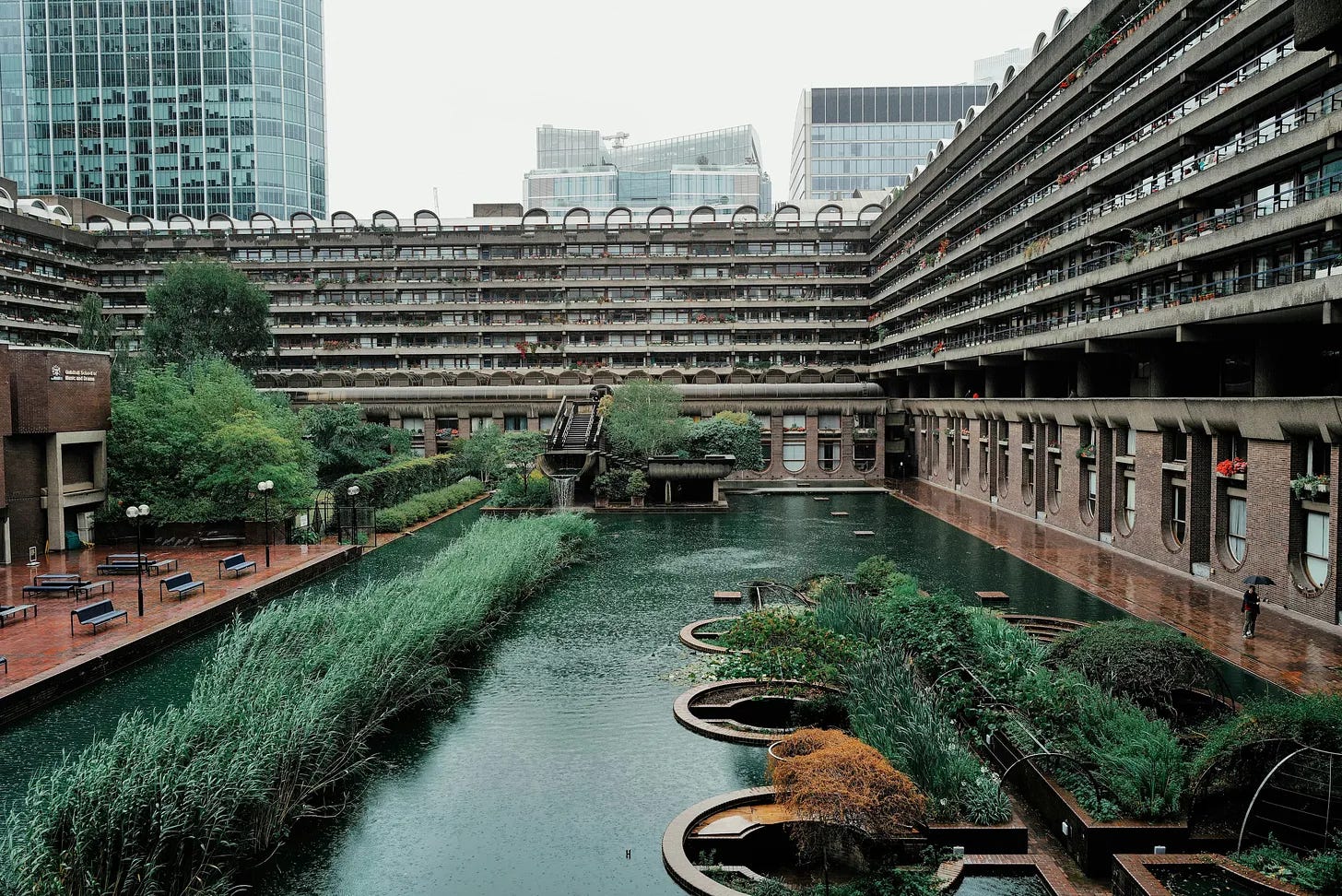
The school sits inside the Barbican Centre, tucked into one corner of a forty-acre concrete city in the middle of London. Early mornings, I worked in the café serving breakfast to my peers. In the evening, I would show patrons their seats in one of the many performance spaces.
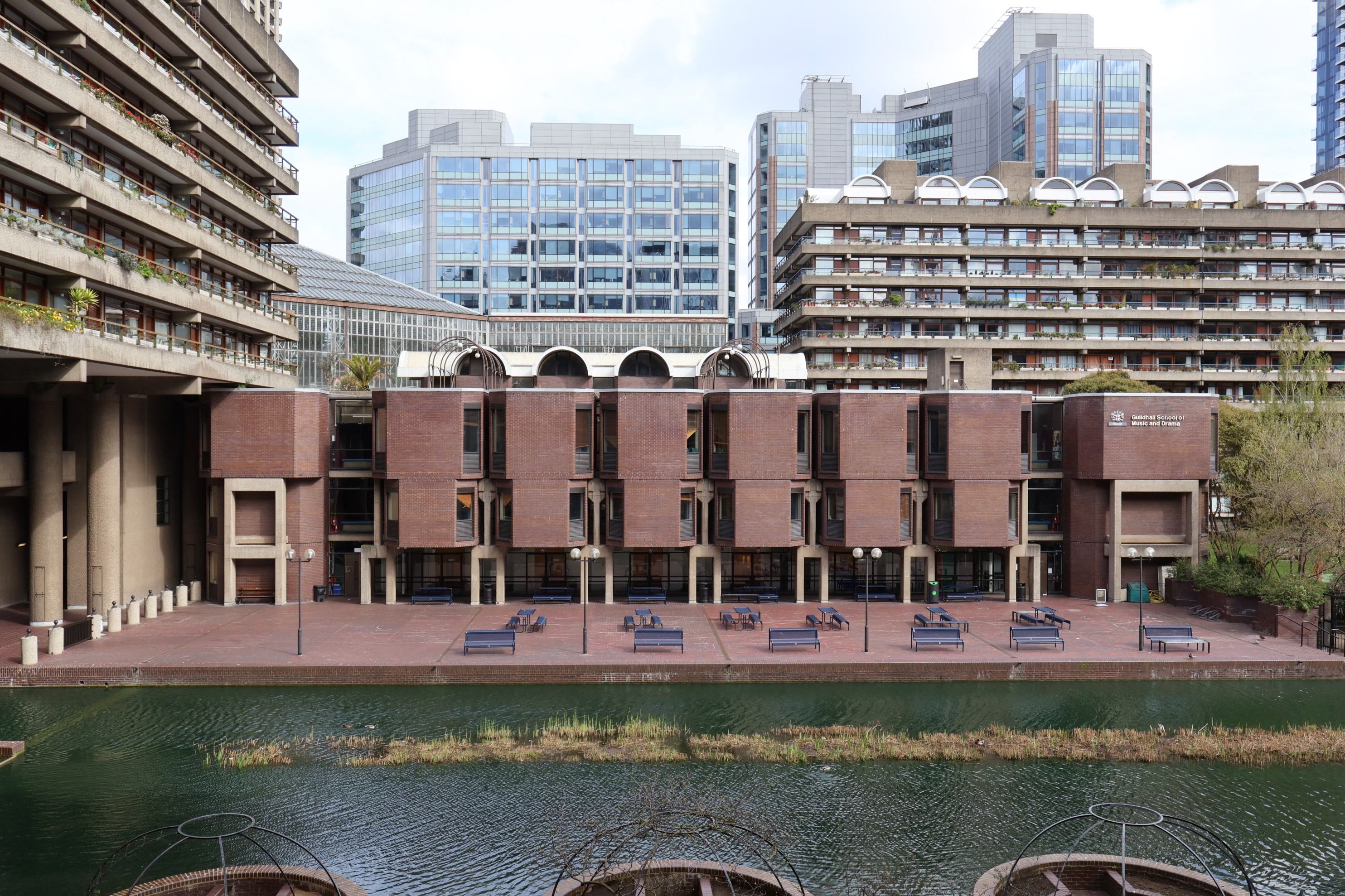
But during the day, I studied stage management and theatre production. I put on my first show in one of the smaller studio spaces there, with two friends from my year. We didn’t know what we were doing. I don’t think anyone putting on their first show ever does. We just wanted to make it work.
A few years later, I graduated. I left, got a job, got another life, eventually had a daughter, eventually learned to fly. The Barbican stayed where it was, and I went where I went.
But I keep going back.
Not for the shows, although I sometimes catch one. Not for the architecture, although I love it. I go back the way you go back to a house you used to live in. To check it’s still standing. To check I am.
A small city on the bones of a destroyed one
The Barbican is not a building. It’s a small city built on the bones of a destroyed one.
On the night of 29 December 1940, German bombers hit the City of London hard. By morning, the area between Aldersgate and Moorgate was forty acres of rubble. St Giles Cripplegate, a medieval church that had stood there for nine hundred years, was a shell. Almost everything else was gone.


It took the city the better part of two decades to decide what to do with the gap. What they eventually built, finished in stages through the seventies and into the early eighties, was a Brutalist fortress designed to bring people back to live in the City. Flats, walkways, lakes, a school, a church, a library, an arts centre. All of it raised above street level. All of it pedestrianised. A whole life stacked vertically into one postcode.
Brutalism is a style that people tend to have strong feelings about. The raw concrete, the sheer scale, the refusal to apologise for any of it. You either love it or you find it intimidating, and the Barbican is the country’s most uncompromising example of either reaction. You can still see the marks of the wooden moulds in the concrete walls, like fingerprints left by the people who poured them.
The architects had a specific resident in mind. They imagined someone, in their words, likely to have a taste for Mediterranean holidays, French food and Scandinavian design. Which is to say, they built it for a particular kind of imagined cosmopolitan, and they let those tastes show. There are influences from all over the place tucked into the design, if you know where to look. For example, there’s a corner where you can convince yourself you’re looking at the Egyptian Sphinx. Then real people moved in, and the place did what places do. It became itself.


What it became is, by any sensible measure, one of the largest performing arts complexes in Europe. The London Symphony Orchestra is resident here. The Royal Shakespeare Company comes through often. Two theatres, three cinema screens, two art galleries, a library, a tropical conservatory. Cafés and bars are sprinkled through the foyers so that you can’t really walk for two minutes without being able to sit down and order a coffee. From the outside, it looks like a fortress. From the inside, it’s a small town.
Getting lost on purpose
The Barbican is famously easy to get lost in.
Generations of visitors have stood on a walkway, looked at a sign, looked back at the walkway and quietly given up. The complex is built on multiple levels, with elevated highways that loop and double back, courtyards tucked behind staircases, and entrances that don’t always look like entrances. Early on, the Centre painted yellow lines on the floor to lead you in from the surrounding tube stations. Follow the yellow lines and they will, eventually, deliver you to the front door.
When I arrived in 2007, I followed them like everyone else. But after a few weeks of lectures and rehearsals, I stopped looking for them. The back stairs nobody used. The corner of the library where the light was good in the afternoon. The quiet spots and the loud ones. The cafés where you could read for two hours without being moved on, and the bars where you’d run into half your year by accident. By the time I left, I could walk the place in my sleep.


Inside the foyers, the building is warmer than its reputation suggests. The concrete is everywhere, but so is wood, and brick, and unexpected splashes of colour in the carpets and the upholstery. Skylights and tall windows pull the daylight in. There are corners that feel hidden even after you’ve found them three times. It’s a building that rewards loitering.


If you only have time for one thing, take the architecture tour. Ninety minutes, properly led, and the only way to see the place as it was meant to be seen. The Barbican was designed to be walked, and walking it with someone who knows what they're looking at is a different experience from wandering on your own.
The open prison
A few years ago, I overheard a Barbican resident talking about life inside the estate. He’d lived there for decades. He said, quite cheerfully, it’s like an open prison. You come in, and you can’t get out again.
It stuck with me. Not because I think he was complaining. He clearly wasn’t. He was describing something that sounded to me like the highest compliment you can pay a place. The Barbican had done its job so well that it had stopped feeling like accommodation and started feeling like the answer.
I think places do this to us more often than we admit. We pass through somewhere when we’re in the middle of becoming who we’ll be, and the place gets folded into us in ways that don’t show up for years. You don’t know which café tables, which corner shops, which walkways are doing the work. You just know, eventually, that they did.
The Barbican made me a theatre maker. It made me someone who could live in a country that wasn’t mine. It introduced me to the friends who became the rest of my life. Two of them, Lily James and Freddie Fox, have gone on to careers you might recognise. The other dozen or so are people I still call when something good or something bad happens. The Barbican gave me my first show and the unreasonable confidence to think I could put on a second one.


I owe it something. I'm not sure what. Maybe just to keep coming back, the way I always do, with the children who are old enough now to have favourite corners of their own.
If you go
The Barbican is easy to get to. Trains into Blackfriars give you a fifteen-minute walk past St Paul’s, which is the prettier approach. The tube drops you at Barbican or Moorgate, both of which lead straight into the complex. There’s a car park beneath the estate if you’d rather drive.
If you're flying yourself in, Biggin Hill to the south is the most practical of the London general aviation airports for a Barbican trip. It will take you around 50 minutes by a combination of taxi and train.
When you arrive, ignore the Silk Street entrance and walk in from the lakeside. It was the original front door, and it tells you something about the place before you’ve stepped inside.
For lunch, the Barbican Kitchen by the lakeside is the easy choice. Sandwiches, pizzas, salads, decent coffee, around £10 a plate, and children under ten eat free with a paying adult. Sit outside if the weather is doing anything reasonable and keep an eye on the local bird population, who have opinions about your sandwich. The Bar and Grill on the first floor does proper burgers in portions that defeat most adults, in the £10 to £20 bracket. The Brasserie overlooks the lake and runs a two-course menu at £28, which is the right shout for a pre-show dinner if there’s something on.


If you’re staying over, the Premier Inn Smithfield is a short walk away and you can usually get a family room for under £100, which leaves more in the budget for tickets.
Do the architecture tour. Visit the library, which is the underrated gem of the complex: music scores you can borrow and play on the pianos there, a children’s section upstairs, and a quiet that the rest of London does not have on offer. And then, if there’s something on, see something. A play, a film, a concert. The point of the place is not the place. The point of the place is what happens inside it.
The yellow lines in my life keep leading me back to the Barbican.
I WISH I would have known about this when I spent my three months in London. I was living nearby. It's on my list for the next visit. What an interesting place!